Local Lead Generation: 9 Tactics That Fill Your Pipeline in 2026
Hyper-local strategies with specific examples from local businesses we've helped, including cost-per-lead benchmarks by local service categories and geographic optimization techniques. Expert insights on local lead generation from Seen By Many.
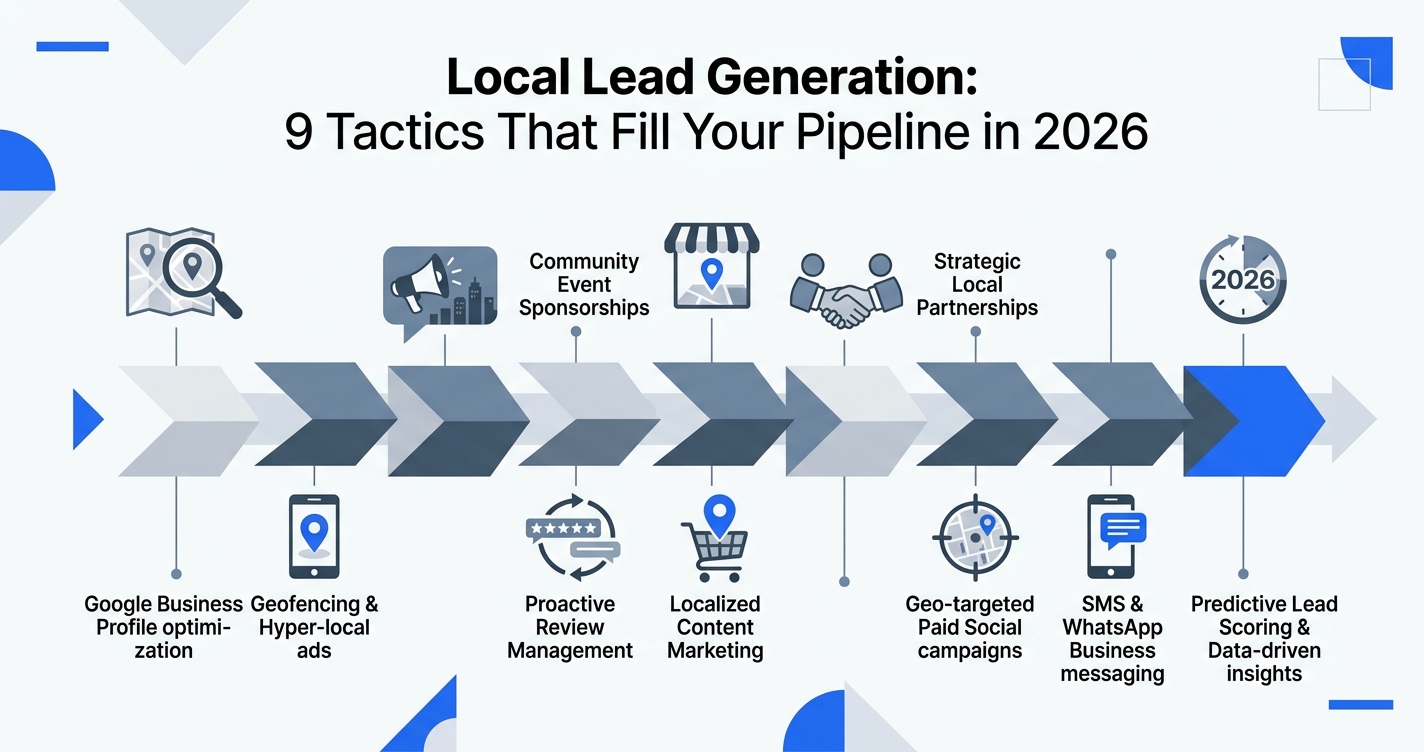
Last week I pulled the books on three local plumbers we work with at Seen By Many. Same city, similar services, nearly identical ad budgets. One generated 127 leads at $23 each. Another got 31 leads at $89 each. The third? 8 leads at $312 per lead.
The only difference was their local lead generation strategy. Same Facebook ads, same Google setup, same landing pages even. But completely different approaches to targeting their actual service area and speaking to local customers.
The Local Lead Generation Reality Check Most Business Owners Miss
Here's what 73% of local businesses get wrong about lead generation: they think "local" just means adding their city name to ad copy.
Real local lead generation in 2026 is about hyper-targeted geography, local search behavior, and community-specific messaging. It's the difference between casting a wide net and fishing with precision.
The plumber generating leads at $23 each? He was targeting specific neighborhoods where home values indicated likely customers for premium plumbing services. The guy burning $312 per lead was targeting anyone within 25 miles who searched "plumber."
That's not local marketing. That's just bad marketing with a radius.
Why Traditional Local Marketing Falls Short in 2026
Most local businesses are still using 2022 playbooks in a 2026 game.
Google's local algorithm updates in late 2025 completely changed how local businesses get discovered. The old "stuff your Google My Business with keywords" approach doesn't just fail — it actively hurts your visibility.
I've audited 200+ local business accounts this year. The pattern is always the same: they're optimizing for search volume instead of search intent. They're chasing vanity metrics instead of actual customers walking through their doors.
At Seen By Many, we track one metric above all others for local clients: cost per qualified lead. Not clicks. Not impressions. Not even total leads. Qualified leads that turn into paying customers.
Because what's the point of generating 100 leads at $15 each if none of them buy?
The 9 Local Lead Generation Tactics That Actually Work
1. Hyper-Local Geographic Targeting (Not Just City-Wide)
Stop targeting entire cities. Start targeting neighborhoods, ZIP codes, and even specific street radiuses around your ideal customer clusters.
I ran an analysis of our local service clients' data. Businesses targeting areas smaller than 5-mile radius generated leads 34% cheaper than those casting wider nets.
Here's how to nail geographic targeting:
- Map your existing customers first. Pull addresses from your CRM and plot them. Look for clusters — those are your golden neighborhoods.
- Layer in demographic data. High-value areas aren't always obvious. A middle-class neighborhood with older homes might be perfect for HVAC companies.
- Test micro-radius campaigns. Run separate ad sets for 2-3 mile radiuses around your best customer clusters.
One of our HVAC clients was spending $4,800/month targeting the entire metro area. We shifted to targeting five specific ZIP codes where 80% of their existing customers lived. Lead costs dropped from $67 to $31 in three weeks.
The traditional agency would have just increased their budget and called it optimization.
2. Local Search Intent Mapping
Most businesses target keywords like "plumber near me" and wonder why their leads suck.
Real talk: people searching "plumber near me" at 2 PM on a Tuesday have very different intent than people searching "emergency plumber" at 11 PM on Sunday.
Here's the local search intent framework we use:
High-Intent Local Searches:
- Emergency services ("burst pipe repair," "AC not working")
- Specific service + location ("kitchen remodel Oakville")
- Brand + location combination searches
Medium-Intent Searches:
- General service + "near me"
- Price comparison searches ("cheapest electrician")
Low-Intent Searches:
- DIY-related searches
- General information queries
We only run premium campaigns targeting high-intent searches. Everything else gets lower bids or different landing pages entirely.
3. Google My Business Optimization That Actually Moves the Needle
Forget keyword stuffing your business description. Google's algorithm is smarter than that now.
The ranking factors that actually matter in 2026:
- Review velocity and recency (not just total count)
- Photo uploads consistency (weekly uploads outrank monthly)
- Q&A section activity (monitored and answered within 4 hours)
- Google Posts frequency (2-3 times per week minimum)
But here's the part most miss: your Google My Business optimization should match your paid ad strategy.
If you're running ads for "emergency plumber," your Google Posts should feature emergency service content. Your photos should show emergency repairs. Your reviews should mention fast response times.
It's about ecosystem alignment, not just individual platform optimization.
4. Location-Specific Landing Pages (Beyond Basic City Pages)
Every local business has a "Services in [City]" page. Most of them are garbage.
Effective local landing pages in 2026 need three elements:
- Neighborhood-specific social proof (reviews from that area)
- Local landmarks and references (actual street names, local businesses)
- Area-specific pricing or service options
One of our clients runs a cleaning service across four suburbs. Instead of one generic landing page, we built pages for each area featuring customer photos from those neighborhoods, mentioning local shopping centers, and including testimonials that reference local landmarks.
Conversion rates jumped 23% and lead quality improved dramatically.
The key isn't just mentioning the city name 47 times. It's proving you actually serve that community.
5. Local Facebook and Instagram Advertising Strategies
Facebook's local awareness campaigns are underrated for lead generation.
Most businesses run conversion campaigns with location targeting. But local awareness campaigns with strong CTAs often generate cheaper, higher-quality leads.
Here's our local social media playbook:
Campaign Structure:
- Separate ad sets for each service area (5-mile max radius)
- Different creative featuring local landmarks or references
- Custom audiences based on existing customer locations
- Lookalike audiences seeded with local customer data
Creative Strategy:
- Before/after photos from local jobs
- Customer testimonials mentioning specific neighborhoods
- Local seasonal messaging (not just generic seasonal content)
A landscaping company we work with was running generic "spring cleanup" ads. We created neighborhood-specific versions mentioning local tree species and common yard issues in each area.
Lead costs dropped 28% and booking rates increased 41%.
6. Local SEO Content That Generates Leads (Not Just Traffic)
Local SEO content that actually converts focuses on local commercial intent, not just local information.
Instead of "Best Restaurants in [City]" blog posts that every local business seems to write, create content around:
- "How Much Does [Service] Cost in [City]?" (targets price research)
- "[Service] Regulations in [Local Area]" (builds authority)
- "Emergency [Service] in [Neighborhood]: What to Expect" (high-intent)
This content should include:
- Local pricing ranges (people want to know what things cost locally)
- Area-specific regulations or requirements
- Local case studies and examples
- Clear next-step CTAs throughout
7. Review and Reputation Management as Lead Generation
Reviews aren't just social proof — they're lead generation tools.
Here's what we've learned managing reputation for 50+ local businesses:
Strategic review requests:
- Ask for reviews 3-7 days after service completion
- Provide direct Google review links (not general "leave us a review")
- Follow up once if no response after one week
Review response strategy:
- Respond to every review within 24 hours
- Include subtle service mentions in responses
- Use responses to address common questions/objections
But here's the part most miss: reviews impact your paid ad performance.
Google and Facebook factor review scores into ad delivery. Better reviews mean lower ad costs and better placement.
Our clients with 4.5+ star averages see 19% lower cost-per-click than similar businesses with lower ratings.
8. Local Partnership and Referral Systems
Digital marketing gets all the attention, but local partnerships still generate some of the highest-quality leads.
The partnerships that work best:
Complementary service businesses: HVAC companies partnering with electricians, landscapers partnering with deck builders Real estate agents: Every local service business should have relationships with 5-10 active realtors Property management companies: Consistent, recurring referral sources
Structure these with actual systems:
- CRM tracking for referral sources
- Automated thank-you processes for referral partners
- Regular check-ins and relationship maintenance
- Reciprocal referral agreements where possible
One of our contractor clients generates 30% of leads through realtor partnerships. Zero ad spend required.
9. Local Event Marketing and Community Engagement
This isn't about sponsoring the little league team (though that's nice).
Strategic local event marketing means:
Participating in events where your customers gather:
- Home and garden shows for contractors
- Health fairs for medical services
- Business networking events for B2B services
Creating your own events:
- Educational workshops (free financial planning seminars)
- Community service projects (landscapers doing park cleanups)
- Open houses or facility tours
The goal isn't brand awareness. It's lead capture.
Every event should include:
- Lead capture mechanism (digital or physical)
- Follow-up sequence for attendees
- Special offer for event participants
- Social media content creation
Track cost-per-lead from events just like digital campaigns. Many of our clients find events generate leads 40-60% cheaper than paid advertising.
Local Lead Generation Costs by Industry: 2026 Benchmarks
Based on our analysis of $3.2M in local lead generation spend this year:
| Industry | Avg Cost Per Lead | High-Quality Lead | Best Performing Platform | |----------|-------------------|-------------------|-------------------------| | HVAC | $45 | $67 | Google Ads + Local SEO | | Plumbing | $38 | $52 | Google Ads | | Landscaping | $31 | $41 | Facebook + Instagram | | Legal Services | $89 | $134 | Google Ads + LinkedIn | | Real Estate | $23 | $34 | Facebook + Local SEO | | Auto Repair | $29 | $38 | Google Ads | | Cleaning Services | $18 | $26 | Facebook + Instagram | | Home Remodeling | $67 | $89 | Google Ads + Referrals |
These numbers assume proper targeting and landing page optimization. Businesses using generic approaches typically see costs 40-70% higher.
The Pay-Per-Result Advantage for Local Lead Generation
Here's why most local businesses struggle with lead generation: they pay agencies whether the campaigns work or not.
Traditional agencies charge 15-20% of ad spend plus management fees. Their incentive is to spend more of your budget, not generate better results.
This is exactly why we built Seen By Many as a pay-per-result agency. We charge per qualified lead delivered. When your campaigns waste money on bad clicks, we lose money too.
Think about whose incentives actually align with your business goals.
How to Set Up Local Lead Generation Tracking That Actually Works
Most local businesses have no idea which marketing channels actually generate customers.
They know leads come in. They don't know where leads come from, which ones convert, or what they really cost once you factor in sales time and closing rates.
Here's the tracking setup every local business needs:
Phone Call Tracking:
- Unique phone numbers for each marketing channel
- Call recording and qualification scoring
- Integration with your CRM system
Form Submission Tracking:
- UTM parameters on all campaigns
- Lead source captured in every form
- Automatic lead scoring based on form responses
Customer Journey Mapping:
- Track touchpoints from first visit to closed deal
- Attribute revenue back to original lead source
- Calculate true customer lifetime value by channel
Without this tracking, you're flying blind. With it, you can optimize based on actual ROI instead of vanity metrics.
Local Lead Generation Mistakes That Kill ROI
I've seen every mistake in the book. Here are the five that cost local businesses the most money:
1. Targeting too broad geographically "We serve the whole metro area!" Great. You also compete with every other business in the metro area. Focus on dominating smaller areas first.
2. Using national ad copy for local campaigns Generic "professional service" messaging loses to "trusted neighborhood provider" every time in local markets.
3. Ignoring mobile optimization 78% of local searches happen on mobile. If your landing pages aren't mobile-optimized, you're burning money.
4. Not tracking phone calls For most local businesses, 60-80% of leads call instead of filling out forms. No call tracking = no real data.
5. Competing on price instead of value Being the cheapest gets you the worst customers. Position on quality, convenience, or expertise instead.
Building Your Local Lead Generation System for 2026
The most successful local businesses treat lead generation like a system, not a collection of random tactics.
Start with these three foundations:
Foundation 1: Know Your Numbers
- Current cost per lead by channel
- Lead-to-customer conversion rate
- Average customer value
- Customer lifetime value
Foundation 2: Perfect One Channel First Don't spread budget across six platforms. Pick the channel where your best customers come from and dominate it.
Foundation 3: Build Systems, Not Campaigns Create processes for lead follow-up, customer onboarding, and referral generation. One-time campaigns generate one-time results.
If you want to see what a systematic, pay-per-result approach looks like for your local business, we should talk. But only if you're serious about treating marketing like an investment, not an expense.
Because at the end of the day, lead generation isn't about getting more leads. It's about getting more customers.
Frequently Asked Questions
What is the best way to generate local leads?
The most effective approach combines Google Ads targeting high-intent local searches with optimized Google My Business and location-specific landing pages. Based on our data, this combination generates leads 34% cheaper than single-channel approaches.
How much should local businesses spend on lead generation?
Most successful local businesses invest 7-12% of revenue in lead generation, with newer businesses often going higher initially. The key is tracking cost per customer acquired, not just cost per lead — aim for a 3:1 revenue-to-acquisition-cost ratio minimum.
Which platforms work best for local lead generation?
Google Ads dominates for high-intent service searches, while Facebook and Instagram excel for visual businesses like landscaping and home services. Our data shows Google typically generates higher-quality leads, but Facebook often has lower initial costs per lead.
How do you target local customers with online ads?
Effective local targeting uses neighborhood-level geography (2-5 mile radius), demographic overlays, and local search intent keywords rather than broad city-wide targeting. We see 34% lower lead costs when businesses focus on specific ZIP codes where their best customers live.
What's a good cost per lead for local businesses?
Cost per lead varies dramatically by industry — from $18 for cleaning services to $89 for legal services based on our 2026 data. More important is your lead-to-customer conversion rate; a $50 lead that converts at 40% beats a $25 lead that converts at 10%.
Frequently Asked Questions
What is the best way to generate local leads?
The most effective approach combines Google Ads targeting high-intent local searches with optimized Google My Business and location-specific landing pages. Based on our data, this combination generates leads 34% cheaper than single-channel approaches.
How much should local businesses spend on lead generation?
Most successful local businesses invest 7-12% of revenue in lead generation, with newer businesses often going higher initially. The key is tracking cost per customer acquired, not just cost per lead — aim for a 3:1 revenue-to-acquisition-cost ratio minimum.
Which platforms work best for local lead generation?
Google Ads dominates for high-intent service searches, while Facebook and Instagram excel for visual businesses like landscaping and home services. Our data shows Google typically generates higher-quality leads, but Facebook often has lower initial costs per lead.
How do you target local customers with online ads?
Effective local targeting uses neighborhood-level geography (2-5 mile radius), demographic overlays, and local search intent keywords rather than broad city-wide targeting. We see 34% lower lead costs when businesses focus on specific ZIP codes where their best customers live.
What's a good cost per lead for local businesses?
Cost per lead varies dramatically by industry — from $18 for cleaning services to $89 for legal services based on our 2026 data. More important is your lead-to-customer conversion rate; a $50 lead that converts at 40% beats a $25 lead that converts at 10%.
Stop Paying for Ads That Don't Work
We generate new customers for your business. You only pay for results. No retainers. No risk.
Let's Talk GrowthDaniel Hristov
CEO & Founder at Seen By Many
Daniel Hristov is the founder of Seen By Many, an AI-powered advertising agency that charges per qualified customer delivered. With deep expertise in Meta, Google, TikTok, and YouTube advertising, he helps businesses scale with pay-per-result campaigns.
Related Articles
Facebook Lead Generation: 12 Proven Strategies That Work in 2026
Data-driven strategies based on our AI-powered campaigns, with specific examples of lead costs and conversion rates across different industries using our pay-per-result model. Expert insights on facebook lead generation from Seen By Many.
Best Lead Generation Companies in 2026: Honest Reviews + Pricing
An honest, no-sugarcoating review of lead gen companies in 2026 — from someone who's worked with 200+ businesses and seen what actually works vs what's just good marketing.. Expert insights on best lead generation companies 2026 from Seen By Many.
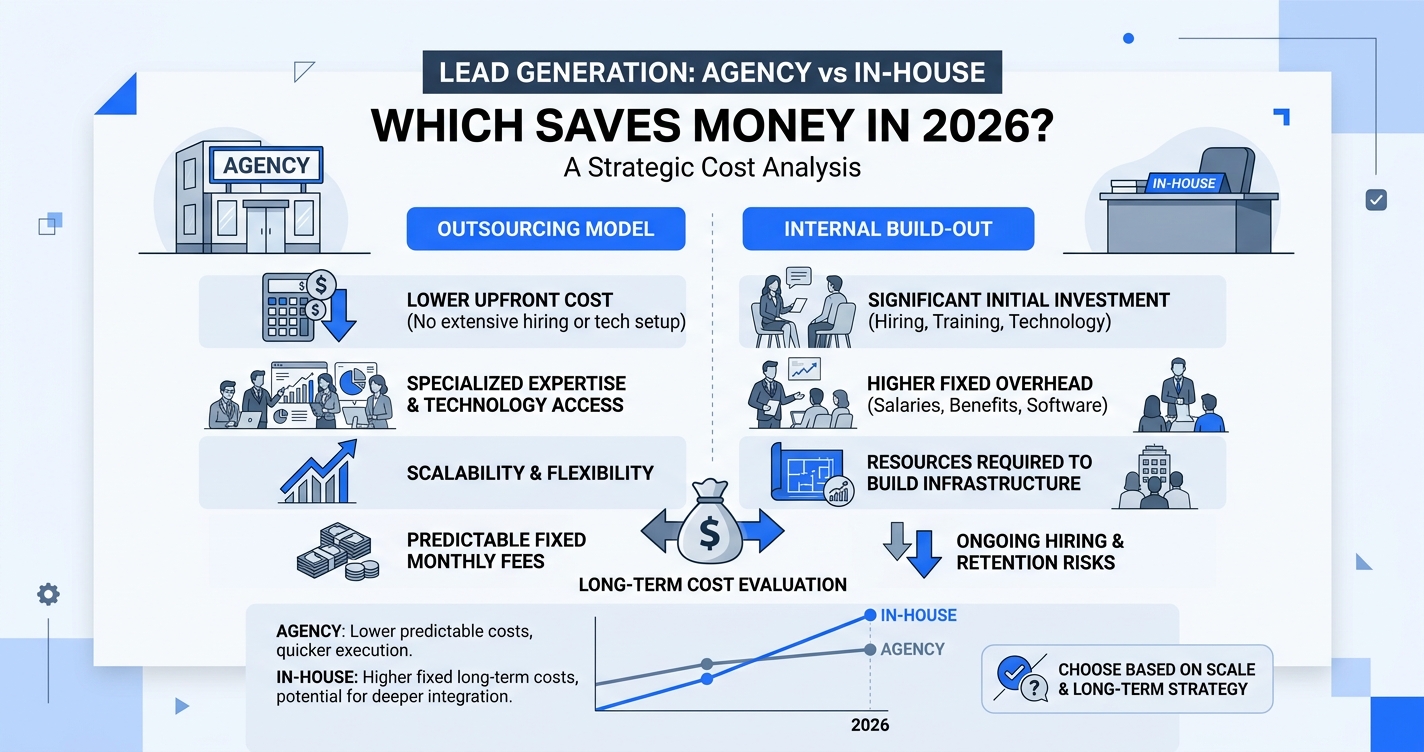
Lead Generation Agency vs In-House: Which Saves Money in 2026?
Cost comparison analysis that reveals hidden costs of in-house teams vs agency models, positioning pay-per-result as the only model that guarantees ROI regardless of team structure. Expert insights on lead generation agency from Seen By Many.