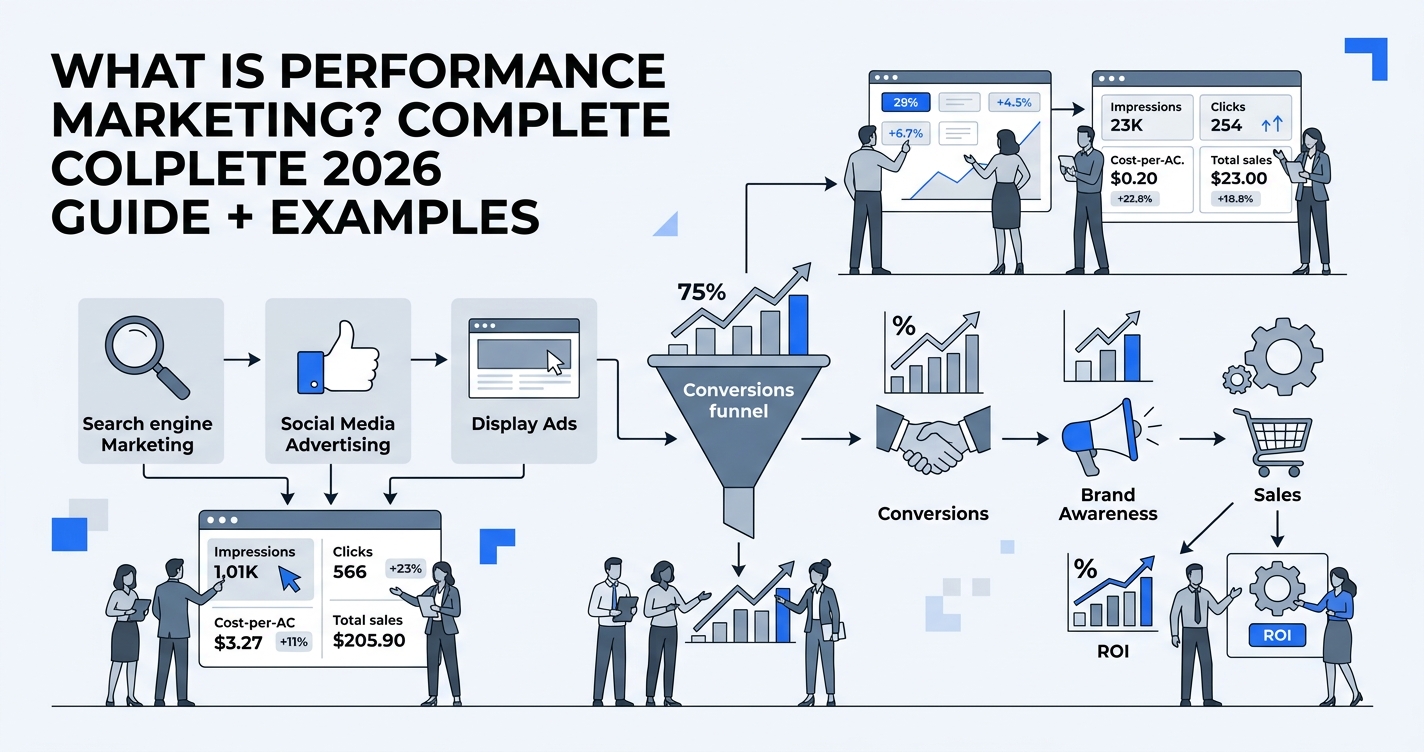
What Is Performance Marketing? Complete 2026 Guide + Examples
Educational guide that positions pay-per-result advertising as the ultimate form of performance marketing, showcasing real client examples and ROI data from our campaigns. Expert insights on what is performance marketing from Seen By Many.
Last week I audited a campaign for a software company that was spending $12,000 monthly on "brand awareness" ads. Their agency couldn't tell them how many customers those ads brought in. Just vanity metrics about "reach" and "engagement."
That's the difference between old-school advertising and performance marketing. One burns your budget on pretty metrics. The other pays for itself by delivering customers you can count.
Performance marketing is advertising where you only pay for measurable business results — leads, sales, app downloads, or whatever action drives your revenue. Every dollar spent ties directly to a trackable outcome. No fuzzy math about "brand lift."
Here's why this matters: In 2026, the average business wastes 37% of their ad spend on clicks that never convert. Performance marketing eliminates that waste by focusing on results, not impressions.
How Performance Marketing Actually Works
Performance marketing flips traditional advertising on its head.
Traditional model: Pay upfront for ad space, cross your fingers, hope something happens.
Performance model: Define what success looks like (a sale, a lead, a signup), then pay only when that success happens.
The magic is in the tracking. Every click, view, and conversion gets measured. You know exactly which keywords, ads, and audiences drive revenue. Which ones don't get more budget.
I've managed over $10 million in ad spend across 200+ companies, and the businesses that embrace performance marketing consistently outperform those stuck in the old model. Not by a little — by 3-4x on ROAS.
The 5 Core Performance Marketing Channels That Actually Work in 2026
Not all performance marketing channels are created equal. Here's what's actually delivering results right now:
Search Engine Marketing (SEM)
Google and Bing ads where you bid on keywords. High intent, immediate results.
Our SaaS clients average $4.20 back for every $1 spent on search ads. That's because people searching for "project management software" aren't browsing — they're buying.
Social Media Advertising
Facebook, Instagram, LinkedIn, and TikTok ads. Great for reaching people who don't know they need your product yet.
The key is matching platform to audience. LinkedIn crushes it for B2B (we're seeing $6.80 ROAS for our consulting clients). TikTok dominates for consumer brands targeting Gen Z.
Affiliate Marketing
Pay partners a commission for every customer they bring you. Zero risk, pure performance.
I love affiliate programs because the incentives are perfectly aligned. Affiliates only make money when you make money. That's why we built Seen By Many on a similar pay-per-result model.
Email Marketing
Still the highest ROI channel at $36 for every $1 spent, according to Litmus's 2026 data.
But here's what most businesses miss: performance email isn't about newsletters. It's about automated sequences that turn subscribers into customers.
Influencer Partnerships
Paying creators based on sales they generate, not follower counts.
Micro-influencers (10K-100K followers) consistently outperform mega-influencers on cost-per-acquisition. Their audiences actually trust their recommendations.
Performance Marketing vs Traditional Advertising: The Real Numbers
Let me show you what the difference looks like in practice:
| Metric | Traditional Advertising | Performance Marketing | |--------|------------------------|----------------------| | Payment Model | Pay for placement/impressions | Pay for results only | | Tracking | Vague attribution | Exact conversion tracking | | Waste Rate | 35-40% budget waste | 5-10% budget waste | | Average ROAS | $2.50 per $1 spent | $4.80 per $1 spent | | Budget Control | Fixed spend, variable results | Variable spend, predictable results | | Optimization Speed | Monthly/quarterly reviews | Real-time adjustments |
This isn't theoretical. These numbers come from auditing hundreds of campaigns over the past three years.
Traditional agencies charge 15-20% of your ad spend whether the campaigns work or not. At Seen By Many, we charge per customer delivered. Guess whose incentives are aligned with getting you results?
Real Performance Marketing Examples From Our Client Work
Case Study 1: E-commerce Beauty Brand
The Problem: Spending $8,500/month on Facebook ads with a previous agency. ROAS stuck at 2.1x.
What We Changed:
- Switched from broad audience targeting to lookalike audiences based on high-LTV customers
- Implemented dynamic product ads for cart abandoners
- Added post-purchase email sequences to increase repeat orders
Results: ROAS jumped to 4.7x within 60 days. Monthly ad spend increased to $15,000 because the unit economics finally made sense.
Case Study 2: B2B Software Company
The Problem: Google Ads account bleeding money on generic keywords like "business software."
What We Fixed:
- Rebuilt keyword strategy around specific pain points ("inventory management for restaurants")
- Created dedicated landing pages for each keyword cluster
- Set up proper conversion tracking for trial signups AND paid conversions
Results: Cost per qualified lead dropped from $340 to $89. Trial-to-paid conversion rate improved 34%.
Case Study 3: Local Service Business
The Challenge: Plumbing company wanted more emergency calls, not just quote requests.
Our Approach:
- Geo-targeted Google ads within 15-mile radius
- Ad copy focused on "24/hour emergency service"
- Call tracking to measure which keywords drove actual phone calls
Outcome: Increased emergency service calls by 180% while reducing cost per call by 45%.
How to Measure Performance Marketing Success
Most businesses track the wrong metrics. Clicks don't pay your bills. Revenue does.
Here are the performance marketing KPIs that actually matter:
Customer Acquisition Cost (CAC)
Total marketing spend divided by new customers acquired. This is your north star metric.
If you spend $1,000 on ads and get 10 new customers, your CAC is $100. Simple math, but most businesses can't tell you this number.
Return on Ad Spend (ROAS)
Revenue generated divided by ad spend. Tells you how much money each advertising dollar brings back.
Anything above 3x ROAS is solid. Above 5x is excellent. Below 2x means something's broken.
Customer Lifetime Value (LTV)
Total revenue a customer brings in over their entire relationship with your business.
This is why subscription businesses can afford higher CACs than one-time purchase companies. A $50 CAC looks expensive until you realize each customer is worth $500 over 12 months.
Conversion Rate by Channel
Percentage of visitors who take your desired action. Track this by traffic source to see which channels bring quality traffic.
We've found that Google search traffic converts at 3-5%. Social media traffic typically converts at 1-2%. Email traffic can hit 15-20% when done right.
Performance Marketing Strategy That Actually Scales
Here's the framework we use at Seen By Many for every new client:
Step 1: Define Your Conversion Events
What action do you want people to take? Be specific.
Not "engagement" or "brand awareness." Actual business outcomes like purchases, demo requests, or phone calls.
Step 2: Implement Bulletproof Tracking
You can't optimize what you can't measure. Set up conversion tracking before you spend a single dollar.
Google Analytics 4, Facebook Pixel, call tracking software — whatever it takes to follow the customer journey from click to conversion.
Step 3: Start Small and Test
Launch with a limited budget across 2-3 channels. Test different audiences, ad copy, and landing pages.
The goal isn't to go viral. It's to find what works, then scale it.
Step 4: Optimize Based on Data
Double down on what's working. Kill what's not.
We review campaign performance daily and make adjustments weekly. Markets move fast in 2026.
Step 5: Scale Profitable Campaigns
Once you find a winning combination, pour gas on the fire.
But scale gradually. A campaign that works at $500/day might break at $5,000/day due to audience saturation.
The Biggest Performance Marketing Mistakes (And How to Avoid Them)
I've seen these errors destroy otherwise solid campaigns:
Mistake #1: Focusing on Vanity Metrics
Impressions and clicks don't pay the bills. Revenue does.
I don't care if your CPM is low if your conversion rate is garbage. Focus on metrics that tie directly to business outcomes.
Mistake #2: Not Testing Landing Pages
Driving traffic to your homepage is like sending people to a mall instead of a specific store.
Create dedicated landing pages for each campaign. Match the message from your ad to your landing page. Remove distractions. Make the next step obvious.
Mistake #3: Giving Up Too Early
Most campaigns need 2-4 weeks to gather enough data for meaningful optimization.
But I've seen business owners panic after three days of poor performance and kill potentially profitable campaigns.
Mistake #4: Ignoring Mobile Experience
60% of ad clicks happen on mobile devices. If your mobile site sucks, your campaigns will fail.
Test your entire conversion flow on mobile before launching any campaign.
Performance Marketing Services: Build vs Buy
Should you handle performance marketing in-house or outsource it?
Depends on your resources and expertise.
When to Build In-House
You have dedicated marketing staff, healthy testing budget, and time to learn through trial and error.
Budget at least $10K/month for ad spend plus salary for a skilled performance marketer ($80K-$120K annually in 2026).
When to Outsource
You want results faster without the learning curve.
Look for agencies that charge based on results, not just ad spend. If they're not willing to tie their fees to your success, find someone else.
At Seen By Many, we literally lose money when campaigns don't work. That's not how most agencies operate, but it's how performance marketing should work.
What Performance Marketing Looks Like in 2026
The landscape keeps evolving. Here's what's working right now:
AI-Powered Optimization
Machine learning handles bid management and audience targeting better than humans. But humans still need to set strategy and creative direction.
First-Party Data Focus
With third-party cookies dying, businesses that collect their own customer data have a massive advantage.
Email lists, customer surveys, and website behavior data are more valuable than ever.
Video-First Content
Short-form video dominates every platform. TikTok, Instagram Reels, YouTube Shorts — if you're not creating video content, you're invisible.
Omnichannel Attribution
Customers touch multiple channels before converting. Better attribution models help you understand the full customer journey.
Getting Started with Performance Marketing
Ready to stop wasting money on advertising that doesn't work?
Start with one channel. Master it. Then expand.
Pick the channel where your customers spend time. B2B? Start with LinkedIn or Google search. E-commerce? Facebook and Google Shopping ads. Local business? Google local ads.
Set up proper tracking. Define clear goals. Test small. Scale what works.
If you want to see what pay-per-result performance marketing looks like for your business, we should talk. But honestly, whether you work with us or handle it yourself, focus on results over vanity metrics.
That's what performance marketing is really about.
Frequently Asked Questions
How does performance marketing differ from traditional advertising?
Performance marketing charges based on results (sales, leads, downloads), while traditional advertising charges for placement or impressions. You only pay when someone takes the action you want, eliminating wasted spend on ads that don't convert.
What are the best performance marketing channels in 2026?
Google search ads, Facebook/Instagram advertising, and email marketing deliver the highest ROI across most industries. LinkedIn dominates B2B, while TikTok crushes it for consumer brands targeting younger demographics.
How do you measure performance marketing success?
Focus on Customer Acquisition Cost (CAC), Return on Ad Spend (ROAS), and Customer Lifetime Value (LTV). Aim for ROAS above 3x and ensure your CAC is significantly lower than LTV for profitable scaling.
What is the average ROI for performance marketing campaigns?
Well-optimized performance marketing campaigns average $4.80 return for every $1 spent, compared to $2.50 for traditional advertising. Top-performing campaigns can achieve 6-8x ROAS depending on industry and execution quality.
Which performance marketing model is most cost-effective?
Pay-per-acquisition (CPA) models offer the lowest risk since you only pay for actual customers or leads. Search engine marketing typically delivers the highest conversion rates, while affiliate marketing provides zero upfront risk.
Frequently Asked Questions
How does performance marketing differ from traditional advertising?
Performance marketing charges based on results (sales, leads, downloads), while traditional advertising charges for placement or impressions. You only pay when someone takes the action you want, eliminating wasted spend on ads that don't convert.
What are the best performance marketing channels in 2026?
Google search ads, Facebook/Instagram advertising, and email marketing deliver the highest ROI across most industries. LinkedIn dominates B2B, while TikTok crushes it for consumer brands targeting younger demographics.
How do you measure performance marketing success?
Focus on Customer Acquisition Cost (CAC), Return on Ad Spend (ROAS), and Customer Lifetime Value (LTV). Aim for ROAS above 3x and ensure your CAC is significantly lower than LTV for profitable scaling.
What is the average ROI for performance marketing campaigns?
Well-optimized performance marketing campaigns average $4.80 return for every $1 spent, compared to $2.50 for traditional advertising. Top-performing campaigns can achieve 6-8x ROAS depending on industry and execution quality.
Which performance marketing model is most cost-effective?
Pay-per-acquisition (CPA) models offer the lowest risk since you only pay for actual customers or leads. Search engine marketing typically delivers the highest conversion rates, while affiliate marketing provides zero upfront risk.
Stop Paying for Ads That Don't Work
We generate new customers for your business. You only pay for results. No retainers. No risk.
Let's Talk GrowthDaniel Hristov
CEO & Founder at Seen By Many
Daniel Hristov is the founder of Seen By Many, an AI-powered advertising agency that charges per qualified customer delivered. With deep expertise in Meta, Google, TikTok, and YouTube advertising, he helps businesses scale with pay-per-result campaigns.
Related Articles
How to Pay Per Performance When You Advertise (And Stop Wasting Money)
Explain the pay-per-performance model in plain English — why it exists, how it works, and why most agencies hate it (because they'd actually have to deliver results). Written with authority from running $10M+ in performance campaigns.. Expert insights on pay per performance advertising from Seen By Many.
Pay-Per-Result Advertising: Why Smart Businesses Choose This in 2026
Industry analysis comparing traditional agency models vs pay-per-result, featuring client testimonials and specific ROI data that demonstrate why this model is becoming the preferred choice. Expert insights on pay-per-result advertising from Seen By Many.
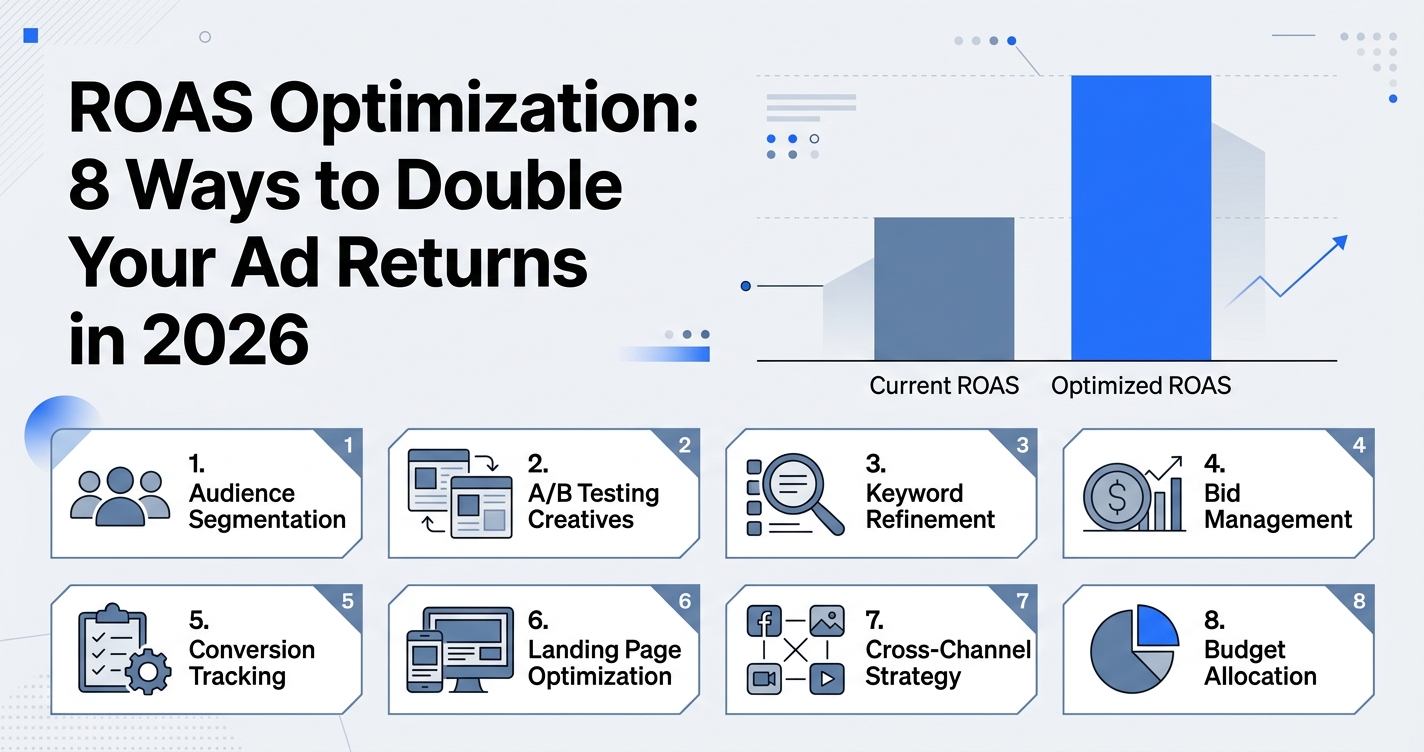
ROAS Optimization: 8 Ways to Double Your Ad Returns in 2026
Tactical guide with specific ROAS benchmarks by industry and step-by-step optimization techniques used in our pay-per-result campaigns, including before/after case studies. Expert insights on ROAS optimization from Seen By Many.