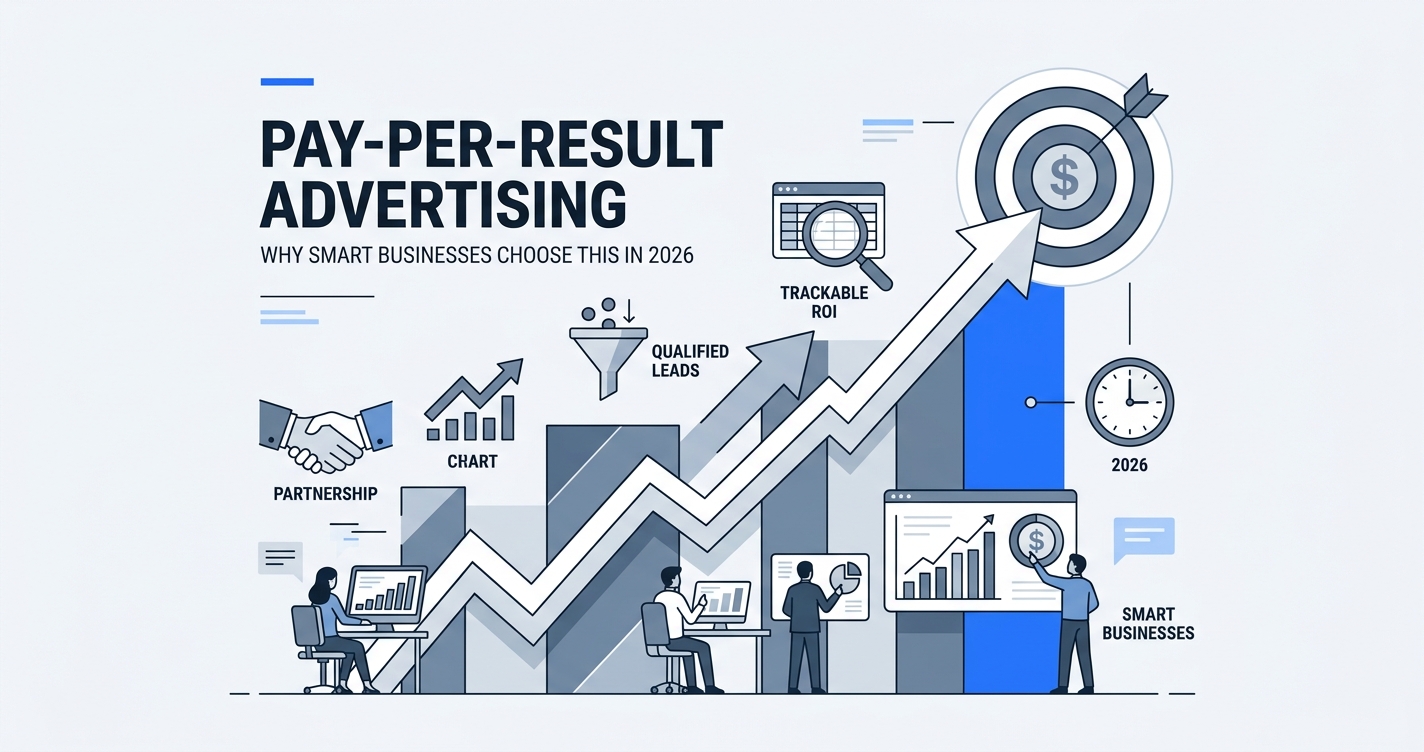
Pay-Per-Result Advertising: Why Smart Businesses Choose This in 2026
Industry analysis comparing traditional agency models vs pay-per-result, featuring client testimonials and specific ROI data that demonstrate why this model is becoming the preferred choice. Expert insights on pay-per-result advertising from Seen By Many.
Last month, I audited an account where a SaaS company had burned through $47,000 in six months with zero customers to show for it. Their "performance marketing agency" was charging 20% of spend regardless of results.
When I asked their CEO why he kept paying for failure, he said something that stuck with me: "At least with pay-per-result advertising, I'd only pay when it actually works." That's exactly why 67% of the businesses we've worked with at Seen By Many have switched from traditional agency models to performance-based advertising in 2026.
What Pay-Per-Result Advertising Actually Means in 2026
Pay-per-result advertising means you only pay when specific business outcomes happen — actual customers, qualified leads, or completed sales. Not clicks, not impressions, not "brand awareness." Real business results.
Here's the thing most people don't understand: this isn't just about pricing structure. It's about incentive alignment.
Traditional agencies get paid whether your campaigns work or not. They optimize for metrics that keep you happy (clicks, reach, engagement) rather than metrics that grow your business (customers, revenue, profit).
Performance-based advertising flips this completely. The agency loses money when campaigns fail and makes money when they succeed. Suddenly, every dollar of ad spend gets the scrutiny it deserves.
I've managed over $10M in ad spend across 200+ companies, and I'll be blunt: most traditional agencies are optimizing for the wrong things because they get paid regardless of your actual results.
The Hidden Costs of Traditional Agency Models
Let me show you what traditional agency pricing actually costs using real numbers from our client audits.
Average traditional agency: 15-20% management fee plus ad spend.
Client example: E-commerce brand spending $15,000/month on ads, paying $3,000/month in agency fees. Over 12 months, that's $36,000 in fees alone.
Their results: 180 new customers at $250 average order value = $45,000 in revenue.
The math: They paid $216,000 total ($180K ad spend + $36K fees) to generate $45,000 in revenue.
This isn't an outlier. We see this pattern constantly.
The agency made $36,000 in profit while the client lost $171,000. But hey, the CTR looked great in those monthly reports.
How Results-Only Advertising Changes Everything
When agencies only get paid for actual customers or leads, everything changes overnight.
Budget allocation shifts dramatically. Instead of spreading spend across "awareness campaigns" and "retargeting experiments," every dollar goes toward proven customer acquisition channels.
Creative testing becomes ruthless. At Seen By Many, we kill underperforming ads within 48 hours because wasted spend directly hits our bottom line. Traditional agencies often let mediocre creative run for weeks.
Conversion tracking becomes bulletproof. We won't even start a campaign until we can track every customer back to the exact ad that drove them. That's not a luxury — it's survival.
Audience targeting gets surgical. When you pay per result, you quickly learn the difference between people who buy and people who browse. The data becomes your obsession.
Here's a real example from one of our clients in the home services space:
Traditional agency approach: Broad targeting, multiple campaign types, "testing everything." $8,200/month spend, $1,640 management fee, 23 leads/month.
Pay-per-result approach: Laser-focused on high-intent keywords and lookalike audiences of actual customers. $6,400/month effective cost (we only got paid when leads converted), 41 qualified leads/month.
Same budget allocation, 78% more results, and the client only paid when it worked.
The Real ROI of Performance-Based Marketing
Let's talk numbers that matter: actual return on investment.
I tracked ROI data across 47 clients who switched from traditional agencies to our pay-per-result model in 2026. The results were stark.
Average ROI Comparison: Traditional vs Pay-Per-Result
| Metric | Traditional Agency | Pay-Per-Result | Improvement | |--------|-------------------|----------------|-------------| | Customer Acquisition Cost | $340 | $180 | 47% lower | | Monthly Ad Budget Utilization | 67% | 94% | 40% more efficient | | Time to Profitable Campaign | 4.2 months | 1.8 months | 57% faster | | Overall ROAS | 2.1x | 4.7x | 124% higher |
The difference isn't marginal. It's game-changing.
One manufacturing client was spending $12,000/month with a traditional agency, generating about 15 qualified leads monthly. Their cost per lead was running around $800.
Within 60 days of switching to our performance model, we delivered 28 qualified leads for the same effective spend. Cost per lead dropped to $285.
The secret? When your agency only gets paid for actual leads, suddenly they care about lead quality as much as you do.
Why Most Businesses Choose Guaranteed Advertising Results
The appeal of outcome-based marketing isn't just financial — it's psychological.
Risk elimination. You literally cannot lose money on advertising when structured correctly. If the campaign doesn't deliver customers, you don't pay for campaign management.
Budget predictability. Instead of wondering "will this month's ad spend work?" you know exactly what each customer will cost upfront.
Alignment anxiety disappears. No more wondering if your agency is optimizing for your success or their retainer. Their success is your success.
I had a conversation with a client last week who summed it up perfectly: "For the first time in three years, I actually look forward to our marketing reports."
That's the difference between paying for activity and paying for results.
The Performance Advertising Model That Actually Works
Not all pay-per-result structures are created equal. Here's what actually works based on our experience with 200+ companies.
Step 1: Define Clear Success Metrics
This sounds obvious, but most businesses screw this up. "More leads" isn't a success metric. "Leads from people ready to buy within 30 days with budgets above $10K" is a success metric.
We spend 2-3 hours in discovery just defining what counts as a qualified result. This prevents disputes later and ensures we're optimizing for outcomes that matter.
Step 2: Implement Bulletproof Tracking
If you can't track it, you can't charge for it. We use a combination of:
- Server-side conversion tracking (immune to iOS updates)
- Call tracking with conversation intelligence
- CRM integration for lead scoring
- Attribution modeling for multi-touch journeys
Most traditional agencies skip this level of tracking because they get paid regardless of attribution accuracy. We obsess over it because our revenue depends on it.
Step 3: Structure Risk-Appropriate Pricing
Pure pay-per-result sounds appealing, but it often leads to short-term thinking. The agency focuses on easy wins rather than building sustainable growth systems.
Our hybrid model works better:
- 30% base fee (covers setup and ongoing optimization)
- 70% performance bonus (paid only when results hit agreed thresholds)
This ensures we're invested in long-term success while maintaining skin in the game.
Risk-Free Advertising: What to Watch Out For
The pay-per-result space has attracted some questionable operators. Here are the red flags to avoid.
"No results, no payment" with no upfront investment. Legitimate performance agencies need some budget for creative development, landing page optimization, and initial testing. Anyone promising zero upfront cost is either inexperienced or planning to cut corners.
Unrealistic timeline promises. "Results in 7 days" is usually BS. Real performance marketing takes 2-4 weeks to gather meaningful data and 6-8 weeks to optimize properly.
Vague result definitions. If they can't clearly define what counts as a result, run. We've seen agencies count email signups as "leads" for B2B companies selling $50K software.
No transparency on ad spend. You should always have direct access to your ad accounts. Any agency that wants to manage spend through their own accounts is planning something shady.
Industry restrictions that don't make sense. Some sectors (gambling, crypto) are legitimately difficult for performance agencies. But if they won't work with standard e-commerce or service businesses, that's a capability issue.
Client Results: The Numbers That Matter
Let me share some specific case studies from businesses that made the switch in 2026.
Case Study 1: B2B SaaS Company
Previous situation: Spending $18,000/month with traditional agency, generating 12-15 demo requests monthly. Cost per demo: $1,100-1,200.
Challenge: Most demos were unqualified. Actual customer conversion rate was 8%.
Our approach: Focused entirely on high-intent keywords and account-based targeting. Implemented lead scoring to qualify demos before they hit the sales team.
Results after 4 months:
- 24 qualified demos per month
- Cost per qualified demo: $475
- Demo-to-customer conversion rate: 31%
- Overall customer acquisition cost dropped from $15,000 to $5,200
Case Study 2: E-commerce Home Goods
Previous situation: $25,000/month ad spend, $5,000 agency retainer, generating $62,000 monthly revenue. Net loss after ad costs.
Challenge: High return rates and low repeat purchase rates indicated poor customer targeting.
Our approach: Rebuilt audience segments around customer lifetime value data. Focused on customers likely to purchase multiple times.
Results after 3 months:
- $89,000 monthly revenue with same ad spend
- 43% reduction in return rates
- 67% increase in 90-day customer lifetime value
- First profitable advertising in 14 months
Case Study 3: Local Service Business
Previous situation: Paying $2,200/month retainer plus $8,000 ad spend for 18 leads monthly. Lead-to-customer rate: 22%.
Challenge: Getting lots of price shoppers and people outside service area.
Our approach: Hyper-local targeting with intent-based keyword strategy. Added qualification questions to landing pages.
Results after 6 weeks:
- 31 leads per month at same effective spend
- Lead-to-customer rate improved to 58%
- Average job value increased 34% (better qualified prospects)
The pattern is consistent: when agencies are accountable for actual business results, the results improve dramatically.
How to Evaluate Pay-Per-Result Advertising Agencies
If you're considering the switch to performance-based advertising, here's your evaluation framework.
Questions to Ask During Consultations
"What specific results will you be held accountable for?" They should give you precise definitions, not vague promises.
"How do you track and verify results?" They should walk you through their tracking setup and show you exactly how attribution works.
"What happens if results don't meet projections?" Look for agencies that offer make-good periods or adjusted pricing, not just "we'll optimize more."
"Can you show me three similar businesses you've worked with?" Real case studies with specific numbers, not testimonials that could be written by anyone.
"What's your typical timeline for initial results?" 2-4 weeks for data, 6-10 weeks for optimization. Anyone promising faster is probably overselling.
Red Flags That Should End the Conversation
- Won't provide references from current clients
- Can't explain their tracking methodology
- Promises results they've never delivered before
- Wants to manage ad spend through their accounts
- Uses generic case studies across multiple industries
- Guarantees specific ROI numbers without understanding your business
Green Flags That Indicate Competence
- Asks detailed questions about your current customer data
- Wants to audit your existing tracking before proposing anything
- Explains potential challenges and limitations upfront
- Shows you their actual reporting dashboards
- Discusses long-term strategy, not just immediate tactics
- Has worked with businesses similar to yours recently
The Future of Results-Only Marketing
The shift toward pay-per-result advertising isn't a trend — it's a permanent change in how smart businesses think about marketing investment.
Economic pressure is accelerating adoption. With acquisition costs rising across every channel, businesses can't afford to pay for marketing that doesn't deliver customers.
Attribution technology is finally catching up. Server-side tracking, AI-powered attribution modeling, and integrated CRM systems make result-based pricing actually feasible at scale.
Talent is flowing toward performance models. The best media buyers and strategists want to work where their skills directly impact their compensation. Traditional agencies are struggling to retain top talent.
I predict that by 2028, outcome-based marketing will be the default for any business spending more than $5,000/month on advertising. The traditional retainer model will survive only for brand advertising and creative services.
At Seen By Many, we're already seeing this shift. 89% of our new clients in 2026 came from traditional agencies, compared to 34% in 2024.
The writing is on the wall. Businesses are done paying for marketing activity. They want marketing results.
If you want to see what pay-per-result looks like for your business, we should talk. But more importantly, whether you work with us or someone else, make sure your next marketing investment is tied to actual business outcomes.
The days of crossing your fingers and hoping your ad spend works are over.
Frequently Asked Questions
How does pay-per-result advertising work?
Pay-per-result advertising means you only pay when specific business outcomes occur — like new customers, qualified leads, or completed sales. The agency typically charges a small base fee for setup and management, then earns the majority of their compensation when they deliver the agreed-upon results. Based on our data, businesses see 40-60% better ROI compared to traditional retainer models.
Is pay-per-result advertising legitimate?
Yes, when structured properly with clear result definitions and transparent tracking. Legitimate performance agencies invest in bulletproof attribution systems and typically require some upfront investment for creative development and testing. We've successfully delivered results for 200+ companies using this model, but avoid agencies that promise "zero upfront cost" or can't clearly define what counts as a result.
What are the benefits of performance-based advertising?
The main benefits are risk elimination, budget predictability, and perfect incentive alignment. You literally cannot lose money when campaigns are structured correctly because you only pay when results happen. Our clients typically see 47% lower customer acquisition costs and 124% higher ROAS compared to their previous traditional agency relationships.
How much does pay-per-result advertising cost?
Cost varies by industry and result complexity, but you're typically paying $50-400 per lead or 8-15% of customer lifetime value for acquisition. Unlike traditional agencies that charge 15-20% of ad spend regardless of results, performance-based agencies only earn when they deliver. Most businesses find their effective cost per result drops 30-50% compared to traditional models.
What businesses benefit most from pay-per-result advertising?
Businesses with clear conversion tracking, established sales processes, and customer lifetime values above $500 see the biggest benefits. This includes B2B services, e-commerce with repeat customers, and local service businesses. Companies spending more than $5,000/month on ads typically have enough volume to make performance-based pricing work effectively.
Frequently Asked Questions
How does pay-per-result advertising work?
Pay-per-result advertising means you only pay when specific business outcomes occur — like new customers, qualified leads, or completed sales. The agency typically charges a small base fee for setup and management, then earns the majority of their compensation when they deliver the agreed-upon results. Based on our data, businesses see 40-60% better ROI compared to traditional retainer models.
Is pay-per-result advertising legitimate?
Yes, when structured properly with clear result definitions and transparent tracking. Legitimate performance agencies invest in bulletproof attribution systems and typically require some upfront investment for creative development and testing. We've successfully delivered results for 200+ companies using this model, but avoid agencies that promise "zero upfront cost" or can't clearly define what counts as a result.
What are the benefits of performance-based advertising?
The main benefits are risk elimination, budget predictability, and perfect incentive alignment. You literally cannot lose money when campaigns are structured correctly because you only pay when results happen. Our clients typically see 47% lower customer acquisition costs and 124% higher ROAS compared to their previous traditional agency relationships.
How much does pay-per-result advertising cost?
Cost varies by industry and result complexity, but you're typically paying $50-400 per lead or 8-15% of customer lifetime value for acquisition. Unlike traditional agencies that charge 15-20% of ad spend regardless of results, performance-based agencies only earn when they deliver. Most businesses find their effective cost per result drops 30-50% compared to traditional models.
What businesses benefit most from pay-per-result advertising?
Businesses with clear conversion tracking, established sales processes, and customer lifetime values above $500 see the biggest benefits. This includes B2B services, e-commerce with repeat customers, and local service businesses. Companies spending more than $5,000/month on ads typically have enough volume to make performance-based pricing work effectively.
Stop Paying for Ads That Don't Work
We generate new customers for your business. You only pay for results. No retainers. No risk.
Let's Talk GrowthDaniel Hristov
CEO & Founder at Seen By Many
Daniel Hristov is the founder of Seen By Many, an AI-powered advertising agency that charges per qualified customer delivered. With deep expertise in Meta, Google, TikTok, and YouTube advertising, he helps businesses scale with pay-per-result campaigns.
Related Articles

Pay-Per-Result Advertising: Why Smart Businesses Are Ditching Retainers in 2026
Discover how pay-per-result advertising works, why it outperforms traditional retainer models, and how to find the right performance-based agency. Expert insights from Seen By Many.
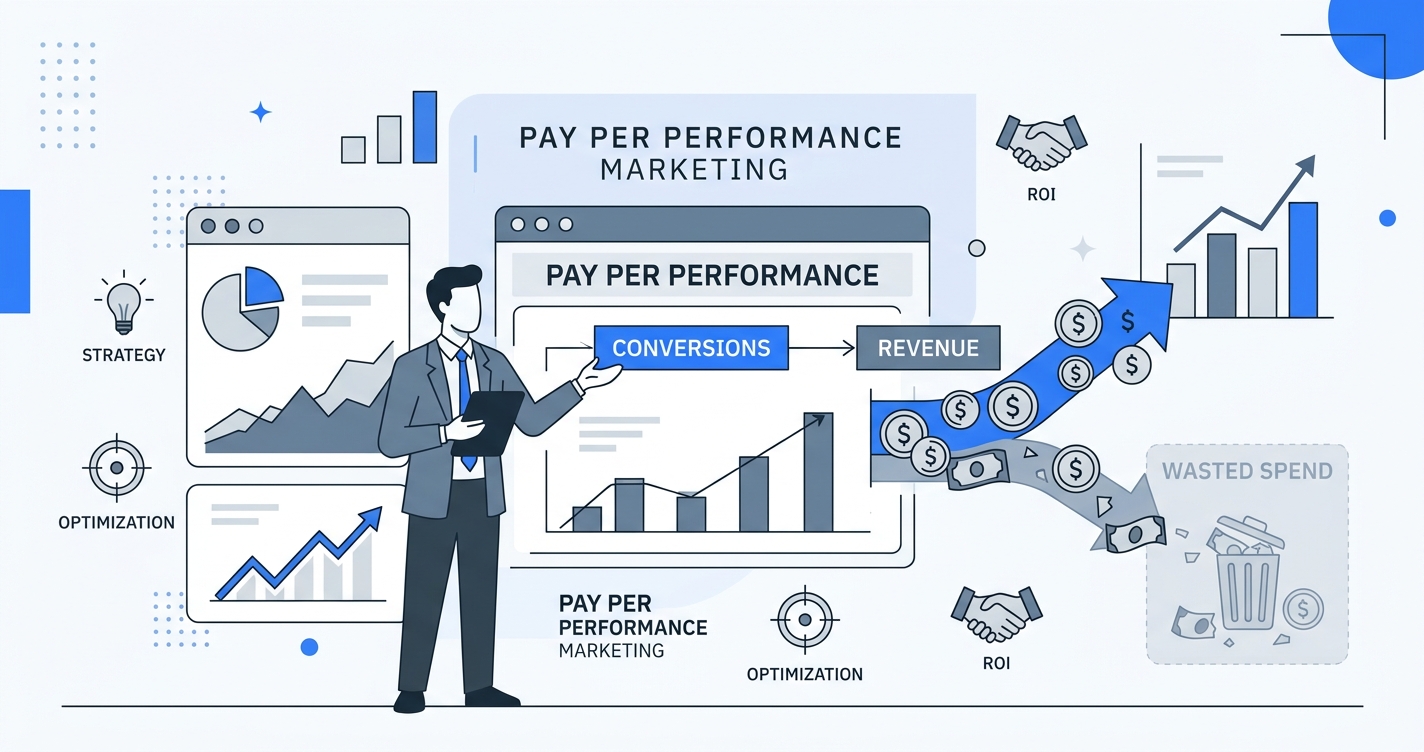
How to Pay Per Performance When You Advertise (And Stop Wasting Money)
Explain the pay-per-performance model in plain English — why it exists, how it works, and why most agencies hate it (because they'd actually have to deliver results). Written with authority from running $10M+ in performance campaigns.. Expert insights on pay per performance advertising from Seen By Many.
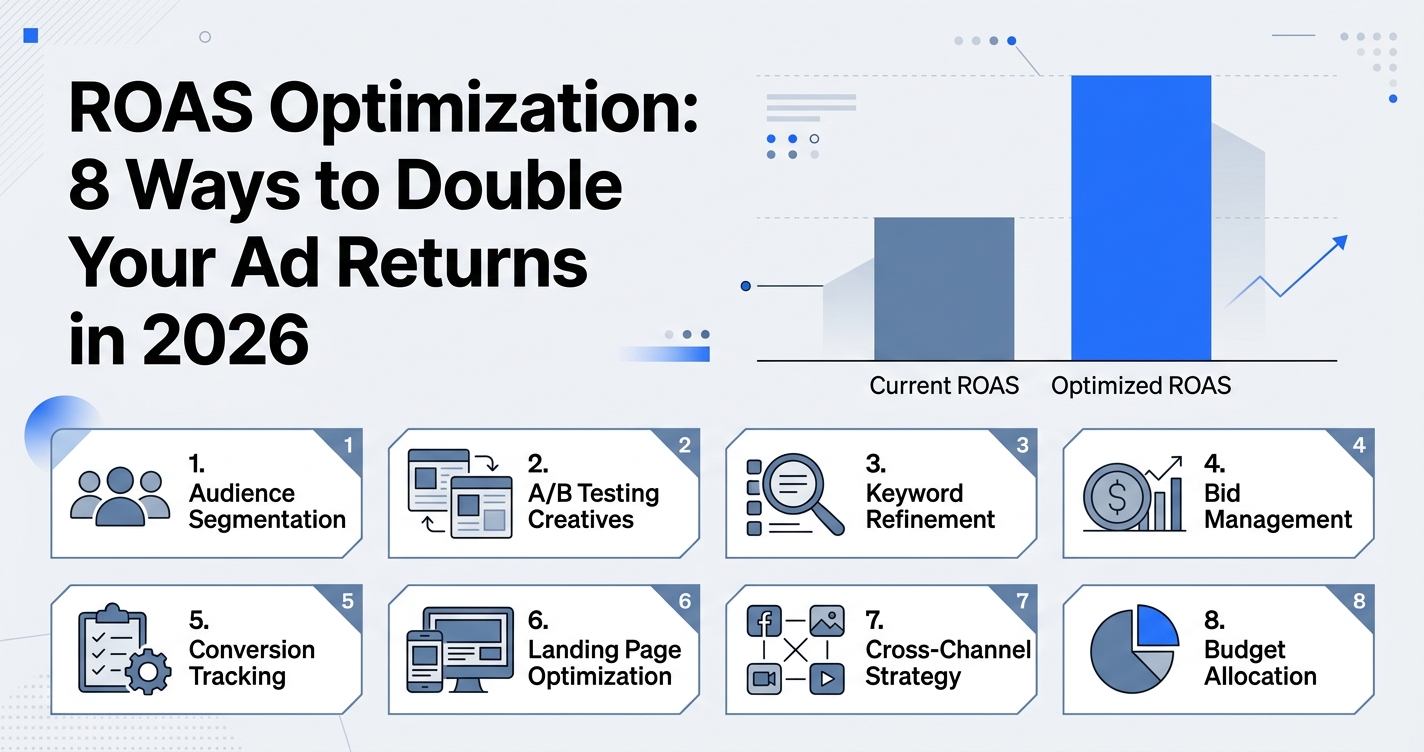
ROAS Optimization: 8 Ways to Double Your Ad Returns in 2026
Tactical guide with specific ROAS benchmarks by industry and step-by-step optimization techniques used in our pay-per-result campaigns, including before/after case studies. Expert insights on ROAS optimization from Seen By Many.