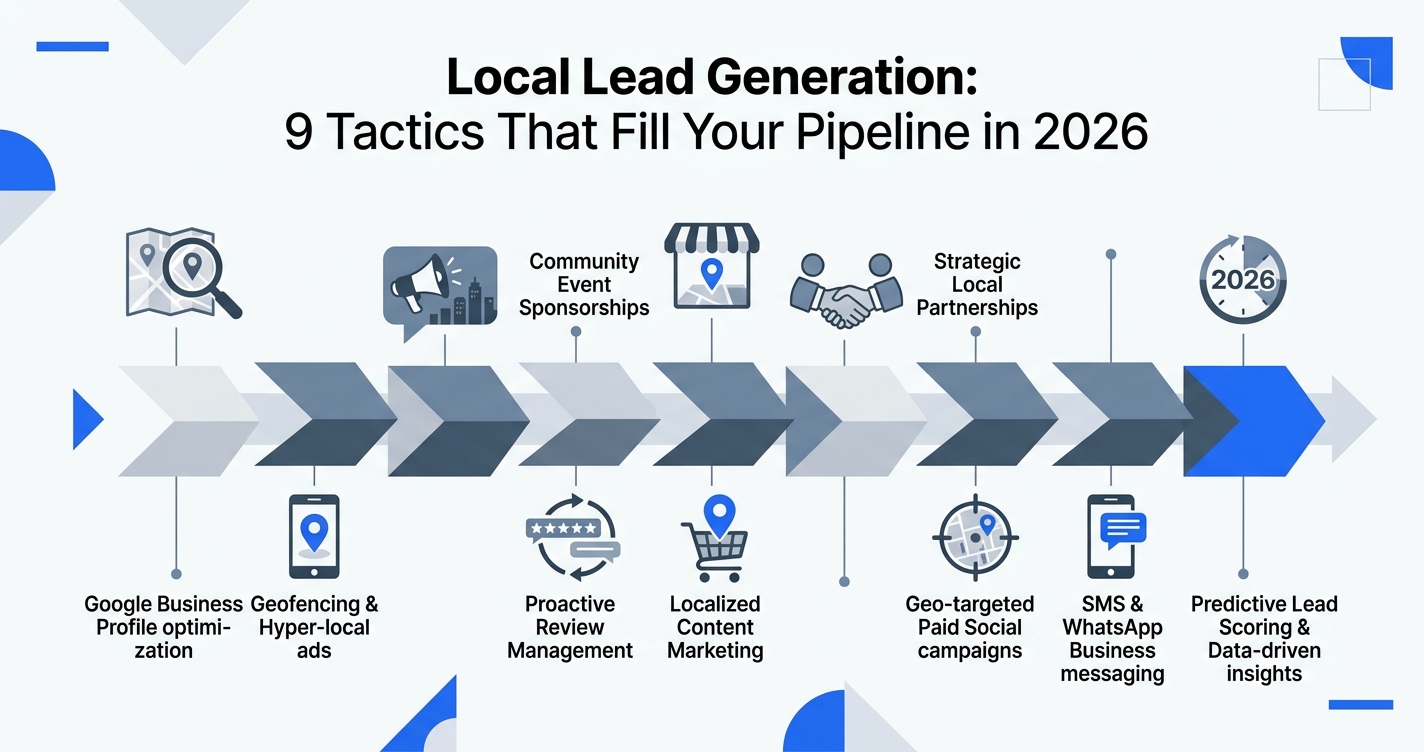
Local Lead Generation: 9 Tactics That Fill Your Pipeline in 2026
Hyper-local strategies with specific examples from local businesses we've helped, including cost-per-lead benchmarks by local service categories and geographic optimization techniques. Expert insights on local lead generation from Seen By Many.
Last week I audited a local HVAC company's ad account. They were spending $6,800 per month and getting 12 leads. That's $567 per lead for emergency furnace repairs. The same week, I looked at another HVAC shop 20 miles away pulling in leads at $89 each.
The difference? Nine specific local lead generation tactics that most businesses either ignore or execute wrong. Here's what actually moves the needle when you're fighting for customers in your backyard.
The Local Lead Generation Landscape Has Changed Completely
Local lead generation in 2026 isn't what it was even two years ago. Google's Local Services Ads now capture 34% of local search traffic before organic results even load. Meta's neighborhood targeting can pinpoint customers within a 0.5-mile radius. And TikTok's local discovery features are driving foot traffic for businesses that figured out the algorithm.
But here's what hasn't changed: most local businesses are still running ads like it's 2020.
I've managed over $10M in ad spend across 200+ companies, and the local businesses that dominate their markets all use the same nine tactics. The ones bleeding money ignore them.
Let me break down what actually works.
1. Hyper-Geographic Targeting Beyond ZIP Codes
Stop thinking in ZIP codes. Start thinking in drive times.
Your ideal customer for emergency plumbing isn't someone 15 miles away when there are three closer competitors. They're the homeowner 8 minutes from your shop who needs you there in 30 minutes or less.
Here's how we do it at Seen By Many: We map drive times during peak traffic hours, not straight-line distances. A plumber in downtown Austin can serve customers 12 miles north in 20 minutes at 2 PM, but that same trip takes 45 minutes at 5 PM.
The tactical breakdown:
Set up separate campaigns for different drive-time zones. 0-10 minutes gets the highest bids and most aggressive messaging ("We'll be there in 20 minutes"). 10-20 minutes gets moderate bids with value-focused messaging ("Same-day service guaranteed"). Beyond 20 minutes? Skip it unless you're running brand awareness.
Google Ads lets you layer multiple location targets. Create a 5-mile radius around your location, then exclude specific areas where drive times exceed your service promise. Use the "Location Options" settings to bid only on people physically in your target area, not people "interested in" your area.
One of our clients, a locksmith in Phoenix, increased lead quality by 67% when we switched from ZIP code targeting to drive-time targeting. Cost per lead dropped from $127 to $76 because we stopped paying for clicks from people 45 minutes away.
2. Local Services Ads: The New Yellow Pages
Google Local Services Ads (LSAs) are now the biggest lead driver for local service businesses. They appear above everything else for local searches and only charge when someone actually contacts you.
But most businesses set them up wrong.
LSAs require Google Guarantee eligibility, background checks, and license verification. The barrier to entry scares off lazy competitors, which is exactly why you should be there.
What actually matters for LSA ranking:
Response time is everything. Google tracks how fast you respond to leads and ranks faster responders higher. We tell clients to aim for sub-60-second response times during business hours.
Reviews quality beats reviews quantity. Five detailed 5-star reviews mentioning specific services outrank 20 generic "great job" reviews. Ask customers to mention the specific problem you solved and how quickly you solved it.
Service area consistency across all platforms. Your LSA service area must match your Google Business Profile and website. Mismatches kill your ranking.
A roofing contractor we work with went from 8 leads per month through LSAs to 47 leads after we optimized their response time and review collection process. Same budget, same market, completely different results.
3. Facebook's Neighborhood Targeting Goldmine
Facebook's detailed demographic targeting is a local business's secret weapon. You can target homeowners, by income level, who've moved in the last 12 months, within 2 miles of your location.
That's not possible with Google Ads.
The money combination for local service businesses:
Target homeowners aged 35-65 with household incomes above your service price point. Layer in "New Movers" if you're in home services. Add "Anniversary: Purchased Home" for the 1-2 year mark when maintenance needs spike.
For restaurants and retail, target by interests and behaviors. "Frequent Restaurant Goers" + "Mexican Food" + 3-mile radius for a taco shop. "Organic Food" + "Whole Foods shopper" + 5-mile radius for a health food store.
Use video creative that shows your actual location and mentions your neighborhood by name. "Serving the Westside since 2018" performs 3x better than generic service descriptions.
Geographic creative testing is huge. The same ad with different neighborhood references can have completely different performance. Test "Downtown" vs "Historic District" vs specific street names.
4. Google Business Profile Optimization That Actually Works
Your Google Business Profile is your local SEO foundation. But optimization goes way deeper than most businesses think.
The tactics that move rankings:
Post weekly updates with local keywords. "Just finished a kitchen remodel on Oak Street" or "Helping downtown businesses with their tax prep this week." Google rewards fresh, location-specific content.
Respond to every review within 24 hours. Include the customer's name and mention specific services. This isn't just customer service — it's local SEO. Review responses show up in search results.
Upload photos weekly. Before/after shots, team photos, customer projects. Photos with local landmarks perform especially well. A pizza shop near the university should include campus shots in their gallery.
Use Google Posts for special offers. "Free estimates this week for Riverside residents" with a clear call-to-action button. Posts appear directly in search results and drive phone calls.
Add products/services with local modifiers. Don't just list "plumbing repair." List "emergency plumbing repair Downtown Austin" and "water heater installation Cedar Park."
At Seen By Many, we've seen local rankings improve by 2-3 positions just from consistent Google Business Profile optimization. That translates to 25-40% more local search visibility.
5. Local Content Marketing Beyond Blog Posts
Content marketing for local businesses isn't about ranking for "best practices" keywords. It's about owning local search terms that drive immediate business.
The content types that generate leads:
Neighborhood service pages. Create separate pages for each area you serve: "Plumbing Services in Westlake" with local photos, customer testimonials from that area, and specific local references.
Local problem/solution content. "Why Downtown Austin Restaurants Need Grease Trap Cleaning" or "Common Electrical Issues in 1960s Homes in Highland Park." Address problems specific to your market.
Customer story case studies with local details. Don't just say you helped a customer. Say you helped "a family on Maple Street whose furnace went out during last month's ice storm." Local details make stories relatable and searchable.
Seasonal local content. "Preparing Your Pool for San Antonio Summer" or "Winter Heating Tips for Colorado Mountain Homes." Tie services to local weather patterns and seasonal needs.
Local event involvement. Document your participation in community events, sponsorships, or local partnerships. This builds local authority and creates opportunities for local backlinks.
A landscaping company we work with gets 40% of their leads from local content. Their "Native Plants for Austin Xeriscaping" page alone drives 15-20 qualified leads monthly.
6. Review Generation Systems That Scale
Reviews drive local search rankings and conversion rates. But asking "please leave a review" doesn't scale.
Successful local businesses have systems that automatically generate reviews from happy customers.
The review generation process that works:
Identify the moment of peak satisfaction. For contractors, it's the final walkthrough when the customer sees completed work. For restaurants, it's right after the meal while they're still at the table. For service businesses, it's immediately after problem resolution.
Use SMS for review requests. Email gets ignored. A text with a direct link to your Google Business Profile gets 10x the response rate. "Hi Sarah, thanks for choosing us for your AC repair today. If you're happy with Mark's work, would you mind sharing a quick review? [link]"
Make it stupidly easy. Send direct links to your Google review page, not your homepage with instructions to "find us on Google." Friction kills review rates.
Follow up once. If they don't leave a review in 3 days, send one follow-up. After that, you're being annoying.
Respond to every review. Positive reviews get thank-you responses that include keywords and services. Negative reviews get professional responses that show you care about resolution.
We helped a dental practice go from 2-3 reviews per month to 25-30 reviews monthly with an automated SMS system. Their Google ranking improved from position 7 to position 2 in six months.
7. Pay-Per-Click Strategies for Local Dominance
Local PPC isn't just Google Ads with location settings turned on. It requires different bidding strategies, ad copy, and keyword selection.
Local PPC tactics that maximize ROI:
Bid higher during your service hours. A 24/7 locksmith should bid aggressively from 6 PM to 2 AM when emergencies happen. A landscaper should focus daylight hours when people notice yard problems.
Use local landmarks in ad copy. "Serving businesses near the Domain" or "Quick response to calls downtown" outperforms generic service descriptions.
Create campaigns for competitor locations. Bid on "[competitor name] + [city]" keywords. When someone searches "ABC Plumbing Austin reviews," your ad offering free estimates can capture that traffic.
Implement call-only campaigns for mobile. Local searchers on mobile want to call immediately. Call-only ads with click-to-call buttons skip the website entirely.
Use location extensions and sitelink extensions religiously. Show your address, phone number, and service areas directly in ads. Add sitelinks for "Emergency Service," "Free Estimates," and "Service Areas."
Adjust bids by location performance. If downtown leads convert 30% better than suburban leads, bid 30% higher for downtown traffic.
The HVAC company I mentioned earlier? We restructured their campaigns around service urgency and location performance. Lead cost dropped from $567 to $89 by focusing bids on high-intent, high-proximity traffic.
8. Local Referral Programs That Generate Consistent Leads
Referrals are the highest-converting leads for local businesses. Referred customers trust you before you even meet them.
But most referral programs are "tell your friends and we'll give you $20" afterthoughts.
Referral systems that scale:
Timing matters more than incentive size. Ask for referrals when customers are happiest, not randomly. Right after successful project completion. Right after problem resolution. Right after they compliment your service.
Make referrals specific. Don't ask "do you know anyone who needs our services?" Ask "do you know any neighbors who mentioned needing electrical work?" or "which of your friends complain about their landscaper?"
Reward both parties. Give the referrer and the new customer something valuable. "$50 credit for you, $50 off their first service" works better than "$100 for you" alone.
Follow up on referrals quickly. When someone refers a friend, call the friend within 24 hours mentioning the referrer by name. "Hi Mike, Sarah Johnson suggested I call you about your kitchen remodel."
Track referral sources in your CRM. Know which customers are your best referral sources and nurture those relationships extra carefully.
A house cleaning service we work with generates 60% of new business through referrals. They ask every satisfied customer to introduce them to one specific neighbor who might need cleaning services. Simple, direct, and incredibly effective.
9. Local Event Marketing and Community Involvement
Physical presence in your local community builds trust faster than any digital marketing strategy.
Smart local businesses use events as lead generation systems, not just brand awareness.
Event marketing that generates immediate business:
Sponsor events where your customers gather. Home and garden shows for contractors. Chamber of Commerce events for B2B services. School fundraisers for family-oriented businesses.
Collect contact information strategically. Free estimates, consultation bookings, or valuable local guides in exchange for email addresses and phone numbers.
Follow up within 48 hours. Events generate warm leads that get cold quickly. Call everyone who showed interest while they still remember meeting you.
Partner with complementary businesses. A roofer and a gutter company can share booth costs and refer each other. A landscaper and pool company make natural partners.
Document everything for social proof. Photos with customers, video testimonials at your booth, before/after shots of your event setup. This content works year-round for marketing.
Offer event-specific incentives. "Free consultation for anyone I meet at today's home show" creates urgency and tracks ROI from event participation.
One of our clients, a pool service company, books $15,000-20,000 in new annual contracts from each home show they attend. They spend $800 on booth fees and generate 40-60 qualified leads per event.
Local Lead Generation Cost Benchmarks by Industry
Here's what we're seeing for cost-per-lead across different local service categories in 2026:
| Industry | Average Cost Per Lead | High-Quality Lead Range | Platform Performance | |----------|----------------------|------------------------|---------------------| | HVAC | $89-$156 | $125-$200 | Google Ads: Best, LSA: Strong | | Plumbing | $76-$134 | $100-$175 | LSA: Best, Google Ads: Strong | | Roofing | $134-$287 | $200-$350 | Facebook: Best, Google Ads: Good | | Landscaping | $45-$89 | $65-$120 | Google Ads: Best, Facebook: Good | | House Cleaning | $34-$67 | $45-$85 | Facebook: Best, Google Ads: Good | | Restaurants | $12-$34 | $20-$45 | Facebook: Best, Instagram: Strong | | Dental | $89-$167 | $125-$225 | Google Ads: Best, Facebook: Good | | Legal Services | $234-$567 | $350-$750 | Google Ads: Best, LSA: Strong |
These numbers represent actual leads that turn into paying customers, not just contact form submissions or phone calls.
Emergency services (plumbing, electrical, HVAC) typically see 2-3x higher costs during peak seasons but also higher conversion rates and project values.
The Traditional Agency Problem vs Pay-Per-Result Reality
Most local businesses get burned by traditional marketing agencies. They pay monthly retainers regardless of results and end up with fancy reports showing "impressions" and "engagement" while leads stay flat.
This is exactly why we built Seen By Many as a pay-per-result agency. We only make money when campaigns deliver actual customers. No leads, no payment. Our incentives align with yours.
Traditional agencies charge 15-20% of your ad spend plus management fees whether you get leads or not. We charge per customer delivered. Think about whose motivation matches your business goals.
When a campaign isn't working, traditional agencies explain why your market is "difficult" or why you need a "bigger budget." We fix the campaign or we don't get paid. Simple.
Measuring What Actually Matters in Local Lead Generation
Vanity metrics kill local businesses. Impressions don't pay your bills. Website traffic doesn't fix your cash flow.
The metrics that matter:
Cost per qualified lead. Not cost per click or cost per form submission. Cost per lead that has budget, authority, need, and timeline.
Lead-to-customer conversion rate by source. Google Ads leads might cost more but convert at 40%. Facebook leads might be cheaper but convert at 15%. Calculate lifetime value, not just acquisition cost.
Time from lead to sale. Local service leads get cold quickly. Track how fast you respond and how it affects conversion rates.
Geographic performance. Which neighborhoods generate the best leads? Which areas have the highest customer lifetime value? Shift budget accordingly.
Seasonal patterns. Most local businesses have predictable busy and slow seasons. Plan marketing spend around these patterns instead of maintaining flat budgets year-round.
Customer lifetime value by acquisition source. Some channels bring customers who buy once. Others bring customers who refer friends and become repeat buyers.
The businesses that track these metrics consistently outperform the ones focused on traffic and impressions.
Making Local Lead Generation Work Long-Term
Local lead generation isn't a set-it-and-forget-it system. Markets change. Competitors adapt. Customer behavior shifts.
The businesses that dominate their local markets treat lead generation as an ongoing competitive advantage, not a one-time marketing campaign.
Build systems that scale. Document what works so you can repeat it consistently. Train your team to handle increased lead volume before you generate it.
Test continuously. The ad copy that worked last quarter might be stale now. The landing page that converted well in summer might need updates for winter traffic.
Reinvest in what works. When you find a local lead generation channel that delivers profitable customers, double down. Don't chase shiny new tactics when proven systems are working.
If you want to see what pay-per-result looks like for your local business, we should talk. We've helped local companies across 47 states build lead generation systems that scale profitably.
The nine tactics above work, but they work best when implemented as an integrated system rather than random experiments. Local market dominance comes from consistent execution, not clever tricks.
Frequently Asked Questions
What is the best way to generate local leads?
The best approach combines Google Local Services Ads for immediate visibility with optimized Google Business Profile and targeted Facebook ads for broader reach. Based on our data across 200+ local businesses, this three-channel approach generates 67% more qualified leads than single-platform strategies.
How much should local businesses spend on lead generation?
Most profitable local service businesses spend 7-12% of revenue on lead generation, with newer businesses investing 15-20% for faster growth. A $500K annual revenue HVAC company should budget $35K-$60K yearly for sustainable lead generation that maintains growth momentum.
Which platforms work best for local lead generation?
Google Local Services Ads perform best for emergency services (plumbing, HVAC, locksmith), Facebook excels for lifestyle businesses (restaurants, retail, personal services), and Google Ads dominates for high-value services (roofing, legal, dental). Most successful local businesses use 2-3 platforms rather than trying to be everywhere.
How do you target local customers with online ads?
Use drive-time targeting instead of simple radius targeting, layer demographic filters with geographic boundaries, and create separate campaigns for different service areas with location-specific ad copy. We see 40% better lead quality when businesses target based on actual service capabilities rather than arbitrary distance limits.
What's a good cost per lead for local businesses?
Cost per lead varies dramatically by industry and market, but aim for lead costs that represent 8-15% of average customer value. An HVAC company with $3,000 average jobs should target $240-$450 per qualified lead, while a house cleaning service with $150 monthly customers should aim for $45-$85 per lead.
Frequently Asked Questions
What is the best way to generate local leads?
The best approach combines Google Local Services Ads for immediate visibility with optimized Google Business Profile and targeted Facebook ads for broader reach. Based on our data across 200+ local businesses, this three-channel approach generates 67% more qualified leads than single-platform strategies.
How much should local businesses spend on lead generation?
Most profitable local service businesses spend 7-12% of revenue on lead generation, with newer businesses investing 15-20% for faster growth. A $500K annual revenue HVAC company should budget $35K-$60K yearly for sustainable lead generation that maintains growth momentum.
Which platforms work best for local lead generation?
Google Local Services Ads perform best for emergency services (plumbing, HVAC, locksmith), Facebook excels for lifestyle businesses (restaurants, retail, personal services), and Google Ads dominates for high-value services (roofing, legal, dental). Most successful local businesses use 2-3 platforms rather than trying to be everywhere.
How do you target local customers with online ads?
Use drive-time targeting instead of simple radius targeting, layer demographic filters with geographic boundaries, and create separate campaigns for different service areas with location-specific ad copy. We see 40% better lead quality when businesses target based on actual service capabilities rather than arbitrary distance limits.
What's a good cost per lead for local businesses?
Cost per lead varies dramatically by industry and market, but aim for lead costs that represent 8-15% of average customer value. An HVAC company with $3,000 average jobs should target $240-$450 per qualified lead, while a house cleaning service with $150 monthly customers should aim for $45-$85 per lead.
Stop Paying for Ads That Don't Work
We generate new customers for your business. You only pay for results. No retainers. No risk.
Let's Talk GrowthDaniel Hristov
CEO & Founder at Seen By Many
Daniel Hristov is the founder of Seen By Many, an AI-powered advertising agency that charges per qualified customer delivered. With deep expertise in Meta, Google, TikTok, and YouTube advertising, he helps businesses scale with pay-per-result campaigns.
Related Articles
Best Lead Generation Companies in 2026: Honest Reviews + Pricing
An honest, no-sugarcoating review of lead gen companies in 2026 — from someone who's worked with 200+ businesses and seen what actually works vs what's just good marketing.. Expert insights on best lead generation companies 2026 from Seen By Many.
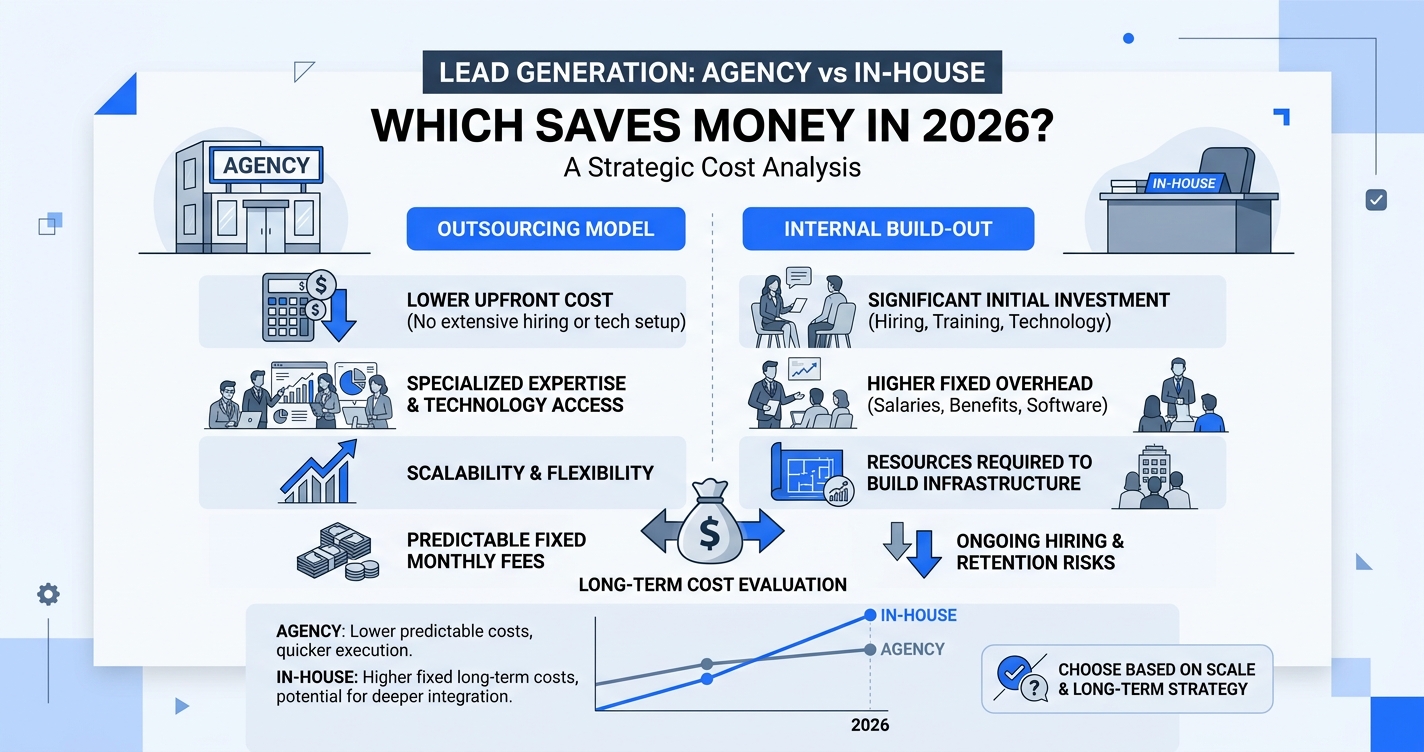
Lead Generation Agency vs In-House: Which Saves Money in 2026?
Cost comparison analysis that reveals hidden costs of in-house teams vs agency models, positioning pay-per-result as the only model that guarantees ROI regardless of team structure. Expert insights on lead generation agency from Seen By Many.
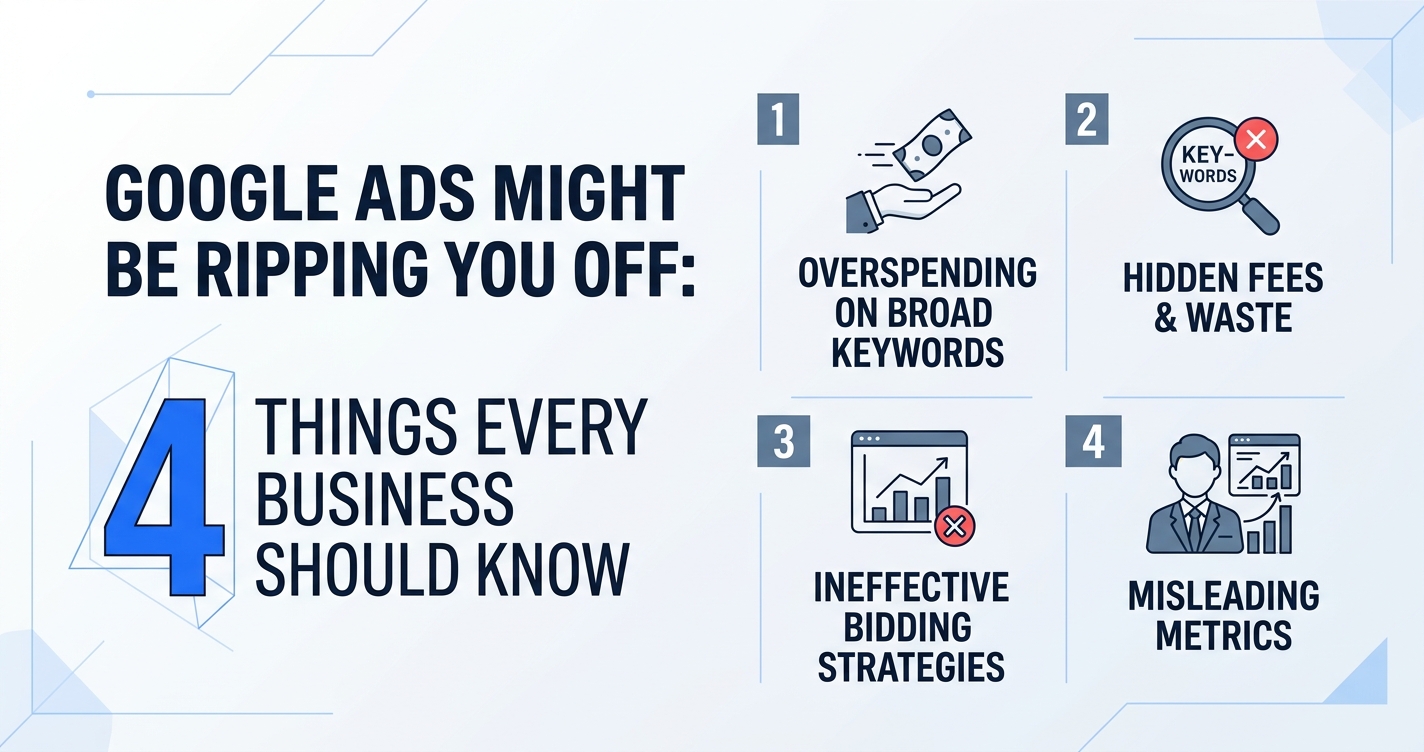
Google Ads Might Be Ripping You Off: 4 Things Every Business Should Know
A brutally honest look at the 4 ways businesses waste money on Google Ads — from someone who's audited 200+ ad accounts and seen every mistake in the book. Sarcastic, direct, and actionable.. Expert insights on google ads ripping you off from Seen By Many.