How to Pay Per Performance When You Advertise (And Stop Wasting Money)
Explain the pay-per-performance model in plain English — why it exists, how it works, and why most agencies hate it (because they'd actually have to deliver results). Written with authority from running $10M+ in performance campaigns.. Expert insights on pay per performance advertising from Seen By Many.
Last week I reviewed an account where a business owner paid their agency $47,000 over six months. Want to know how many actual customers they got? Twelve. That's $3,916 per customer acquired.
Pay per performance advertising flips this backwards logic on its head. Instead of paying agencies to burn through your budget and hope something sticks, you pay only when they deliver actual results — leads, customers, sales. Real business outcomes, not vanity metrics.
What Pay Per Performance Advertising Actually Means
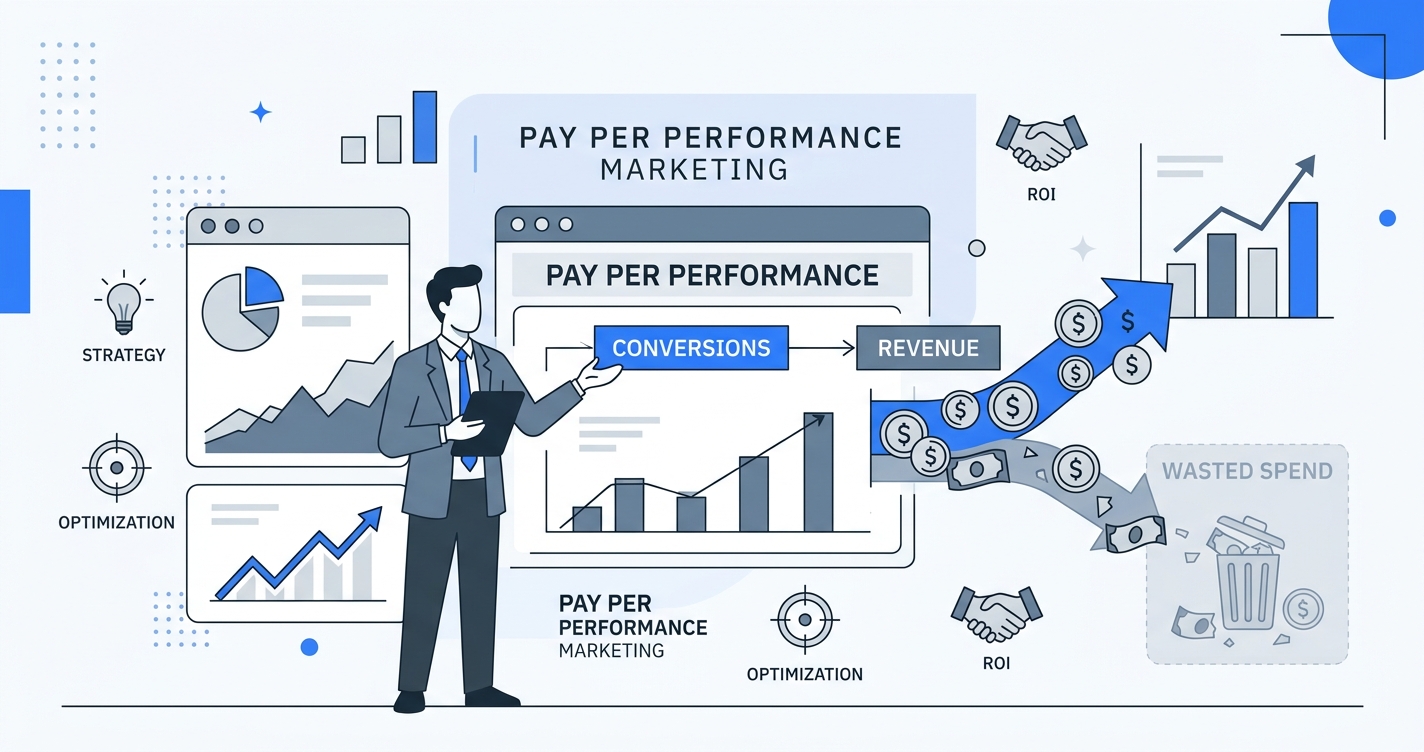
Pay per performance advertising is exactly what it sounds like: you pay based on results, not ad spend or retainer fees. Instead of handing over your credit card and crossing your fingers, payment is tied directly to business outcomes.
Here's how it works in practice. A traditional agency charges 15-20% of your monthly ad spend plus management fees. Spend $10K, pay them $2K regardless of results. A pay-per-performance model? You pay $X per lead generated, $Y per customer acquired, or Z% of revenue driven.
The incentives are completely different. Traditional agencies make more money when you spend more, whether those clicks convert or not. Performance-based agencies only make money when you do.
I've run campaigns both ways across 200+ companies. The difference in focus is night and day. When our revenue at Seen By Many depends on delivering actual customers, we obsess over conversion rates, not impression volumes.
Why Most Agencies Avoid Pay Per Performance Models
Real talk: most agencies hate performance-based pricing because it requires them to actually be good at their job.
Think about it. If you're getting paid 20% of ad spend no matter what, where's the pressure to optimize? You can blame "market conditions" or "seasonal trends" when campaigns underperform. Your check still clears.
Performance-based pricing exposes weak agencies fast. We've taken over accounts from traditional agencies where basic conversion tracking wasn't even set up correctly. They were billing 15% management fees on $15K monthly spend while half the conversions went unmeasured.
The dirty secret? Many agencies use your account as their training ground. They charge you to learn Google Ads fundamentals while your budget gets torched on beginner mistakes.
Performance agencies can't afford that luxury. Every click needs to count because our revenue depends on your success.
How Pay Per Result Marketing Works in Practice
Let me walk you through a real example from our client portfolio. A B2B software company came to us after spending $8,000 monthly with a traditional agency for four months. Their total customers acquired? Seven. Cost per customer: $4,571.
Here's how we restructured it:
Step 1: Define the result that matters. For them, it was qualified sales calls booked, not just form fills. Their previous agency optimized for "leads" but didn't care if they were tire-kickers.
Step 2: Set the performance fee. We agreed on $400 per qualified sales call. If we generated 20 calls, we made $8,000. Zero calls? Zero payment.
Step 3: Align tracking systems. This is where most performance deals fall apart. We integrated their CRM, call tracking, and attribution systems so both parties could see exactly which ads drove which results.
Within 60 days, we delivered 31 qualified sales calls at $400 each. Total cost: $12,400. But here's the kicker — those calls converted to $180K in new revenue. Their traditional agency would have charged them management fees on however much budget it took to get those calls, probably $25K+ in total spend plus $4K in management fees.
The performance model meant they paid less and got better results.
Types of Pay Per Performance Advertising Models
Not all performance-based pricing looks the same. Here are the main models I've seen work:
Pay Per Lead (PPL) You pay a fixed amount for each qualified lead generated. Works best when you have solid lead-to-customer conversion rates and clear lead qualification criteria.
Typical rates: $50-500 per lead depending on industry and lead quality requirements.
Pay Per Acquisition (PPA) Payment only happens when a lead converts to a paying customer. Higher risk for the agency, lower risk for you.
Common in industries with longer sales cycles where lead volume doesn't predict revenue.
Revenue Share The agency takes a percentage of revenue generated from their campaigns. Usually 10-30% depending on margins and campaign complexity.
Popular with e-commerce brands that can track revenue directly back to ads.
Hybrid Models Some combination of small base fee plus performance bonuses. Reduces agency risk while maintaining performance incentives.
At Seen By Many, we typically prefer pure performance models because the incentive alignment is cleaner. But hybrid structures work for companies that need more predictable agency costs.
Setting Up Performance-Based Campaigns That Actually Work
Here's where most performance deals die: crappy tracking and unclear definitions.
Define Your Performance Metric Crystal Clear
"Leads" isn't specific enough. Neither is "sales." You need definitions that eliminate gray areas:
- Qualified leads that meet X criteria and have Y budget
- Customers who complete purchase and don't refund within 30 days
- Sales calls where prospect shows up and lasts minimum 15 minutes
The more specific, the better. Vague metrics lead to disputes and misaligned expectations.
Build Bulletproof Attribution
Most businesses have tracking that's held together with digital duct tape. Performance-based pricing demands better.
You need systems that can definitively connect ad clicks to business outcomes. That means:
- Proper UTM parameter setup on all campaigns
- CRM integration that tracks source attribution through the entire funnel
- Call tracking for phone conversions
- Cross-device and cross-platform measurement
This isn't optional. We won't start performance campaigns until conversion tracking is bulletproof. Too much money depends on getting attribution right.
Set Realistic Volume Expectations
Performance-based campaigns often start slower than traditional spend-focused campaigns. When agencies optimize for actual results instead of cheap clicks, the targeting gets more selective.
A traditional agency might drive 500 "leads" per month by casting a wide net. A performance agency might deliver 50 qualified prospects by being pickier about traffic sources.
The second approach usually drives better business results, but expect the volume adjustment period.
Performance Marketing vs Traditional Agency Models
| Traditional Agency | Performance-Based Agency | |-------------------|-------------------------| | Paid on ad spend % | Paid on results delivered | | Higher spend = higher fees | Better results = higher fees | | Focus on impressions, clicks | Focus on conversions, revenue | | Monthly retainers regardless of performance | Payment tied to business outcomes | | Client bears all campaign risk | Agency shares campaign risk | | Tracking often basic/broken | Tracking must be bulletproof |
The incentive difference changes everything. Traditional agencies optimize for metrics that increase their fees. Performance agencies optimize for metrics that grow your business.
I've seen traditional agencies recommend budget increases to "improve performance" when the real issue was poor targeting. More budget just meant more wasted spend and higher management fees for them.
When Pay Per Performance Advertising Makes Sense
Performance-based pricing isn't right for every situation. Here's when it works best:
You have clear conversion tracking. If you can't measure results accurately, performance pricing becomes a guessing game.
Your funnel is reasonably optimized. Performance agencies can improve ad targeting and creative, but if your website converts at 0.5%, that's not an advertising problem.
You prefer lower risk over lower costs. Performance pricing often costs more per result than perfectly executed traditional campaigns. But it eliminates the risk of paying for zero results.
You've been burned by traditional agencies. Companies that have wasted money on agencies focused on vanity metrics often appreciate the accountability of performance-based models.
Red Flags to Avoid in Performance Deals
Not every agency offering "performance-based pricing" is legit. Here are the warning signs:
Unrealistic guarantees. Any agency promising specific results without seeing your funnel, offer, or market is either lying or inexperienced.
Vague performance definitions. "We'll drive leads" isn't specific enough. Legitimate performance agencies define exactly what counts and what doesn't.
No mention of attribution/tracking. Agencies that don't extensively discuss tracking setup probably don't understand performance marketing fundamentals.
Upfront payments for "setup." While some setup fees are normal, be wary of agencies demanding large upfront payments before delivering any results.
Resistance to transparency. Performance agencies should be excited to share detailed reporting since results drive their revenue.
The best performance partnerships feel collaborative, not transactional.
How We Structure Performance Deals at Seen By Many
Since we built Seen By Many as a pay-per-result agency, I can share exactly how we approach these partnerships.
First month is diagnostic. We audit existing campaigns, fix tracking, and establish baseline performance. This usually involves some traditional billing to set up proper systems.
Months 2-3 are performance-based pilots. We run smaller tests on performance pricing to validate tracking and establish realistic result volumes.
Month 4+ is full performance partnership. Once systems are proven and expectations are calibrated, we scale to full performance-based billing.
The gradual ramp protects both parties. Clients don't risk paying for results we can't deliver, and we don't risk optimizing campaigns with broken attribution.
Our typical performance metrics:
- B2B: $200-800 per qualified sales opportunity
- E-commerce: 15-25% of revenue generated
- Lead generation: $75-400 per qualified lead
Rates depend on industry margins, sales cycle length, and result quality requirements.
Getting Started with Performance-Based Advertising
If you want to test pay-per-performance advertising, start small and focus on measurement first.
Pick one clear conversion goal. Don't try to optimize for brand awareness and lead generation simultaneously. Choose the metric that most directly drives revenue.
Audit your attribution systems. Most tracking is more broken than business owners realize. Fix measurement before committing to performance-based partnerships.
Set a test budget and timeline. Start with 60-90 day pilots before committing to longer performance deals.
Document everything upfront. Clear contracts prevent disputes later when money and results are on the line.
The companies getting the best results from performance-based advertising treat it like a true partnership, not just a different billing model. If you want to see what pay-per-result looks like for your business, we should talk.
Just don't expect us to promise specific results before we understand your funnel.
Frequently Asked Questions
What is pay per performance advertising?
Pay per performance advertising is a pricing model where you pay agencies based on actual business results (leads, sales, customers) rather than ad spend or monthly retainers. Instead of paying 15-20% of budget regardless of outcomes, you pay only when campaigns deliver measurable results. We've found this model reduces client risk by 60-80% compared to traditional agency pricing.
How does pay-per-result marketing work?
You and the agency agree on a specific result definition (qualified leads, customers acquired, revenue generated) and a price per result. The agency runs campaigns optimized for those outcomes and gets paid only when results are delivered. Tracking systems measure and attribute results to specific campaigns, ensuring transparent reporting. Payment happens after results are verified, not before.
Is pay per performance advertising legit?
Yes, but choose agencies carefully. Legitimate performance agencies invest heavily in tracking systems and focus on conversion optimization because their revenue depends on your results. However, some agencies use "performance pricing" as a marketing gimmick while structuring deals that minimize their actual risk. Look for agencies that discuss attribution setup extensively and provide detailed result definitions upfront.
What's the difference between pay per click and pay per performance?
Pay per click (PPC) refers to the ad platform's pricing model where you pay each time someone clicks your ad. Pay per performance refers to how you pay your agency or marketing partner. You might run PPC ads but pay your agency per result delivered, not per click generated. In our experience, agencies paid per click focus on traffic volume while agencies paid per performance focus on conversion quality.
Which agencies offer pay per performance advertising?
Traditional full-service agencies rarely offer true performance pricing because it requires specialized tracking expertise and conversion optimization skills. Specialized performance marketing agencies, affiliate networks, and some digital marketing consultants offer these models. At Seen By Many, we built our entire business model around pay-per-result pricing because we believe incentive alignment drives better outcomes for both parties.
Frequently Asked Questions
What is pay per performance advertising?
Pay per performance advertising is a pricing model where you pay agencies based on actual business results (leads, sales, customers) rather than ad spend or monthly retainers. Instead of paying 15-20% of budget regardless of outcomes, you pay only when campaigns deliver measurable results. We've found this model reduces client risk by 60-80% compared to traditional agency pricing.
How does pay-per-result marketing work?
You and the agency agree on a specific result definition (qualified leads, customers acquired, revenue generated) and a price per result. The agency runs campaigns optimized for those outcomes and gets paid only when results are delivered. Tracking systems measure and attribute results to specific campaigns, ensuring transparent reporting. Payment happens after results are verified, not before.
Is pay per performance advertising legit?
Yes, but choose agencies carefully. Legitimate performance agencies invest heavily in tracking systems and focus on conversion optimization because their revenue depends on your results. However, some agencies use "performance pricing" as a marketing gimmick while structuring deals that minimize their actual risk. Look for agencies that discuss attribution setup extensively and provide detailed result definitions upfront.
What's the difference between pay per click and pay per performance?
Pay per click (PPC) refers to the ad platform's pricing model where you pay each time someone clicks your ad. Pay per performance refers to how you pay your agency or marketing partner. You might run PPC ads but pay your agency per result delivered, not per click generated. In our experience, agencies paid per click focus on traffic volume while agencies paid per performance focus on conversion quality.
Which agencies offer pay per performance advertising?
Traditional full-service agencies rarely offer true performance pricing because it requires specialized tracking expertise and conversion optimization skills. Specialized performance marketing agencies, affiliate networks, and some digital marketing consultants offer these models. At Seen By Many, we built our entire business model around pay-per-result pricing because we believe incentive alignment drives better outcomes for both parties.
Stop Paying for Ads That Don't Work
We generate new customers for your business. You only pay for results. No retainers. No risk.
Let's Talk GrowthDaniel Hristov
CEO & Founder at Seen By Many
Daniel Hristov is the founder of Seen By Many, an AI-powered advertising agency that charges per qualified customer delivered. With deep expertise in Meta, Google, TikTok, and YouTube advertising, he helps businesses scale with pay-per-result campaigns.
Related Articles
Pay-Per-Result Advertising: Why Smart Businesses Choose This in 2026
Industry analysis comparing traditional agency models vs pay-per-result, featuring client testimonials and specific ROI data that demonstrate why this model is becoming the preferred choice. Expert insights on pay-per-result advertising from Seen By Many.

Pay-Per-Result Advertising: Why Smart Businesses Are Ditching Retainers in 2026
Discover how pay-per-result advertising works, why it outperforms traditional retainer models, and how to find the right performance-based agency. Expert insights from Seen By Many.
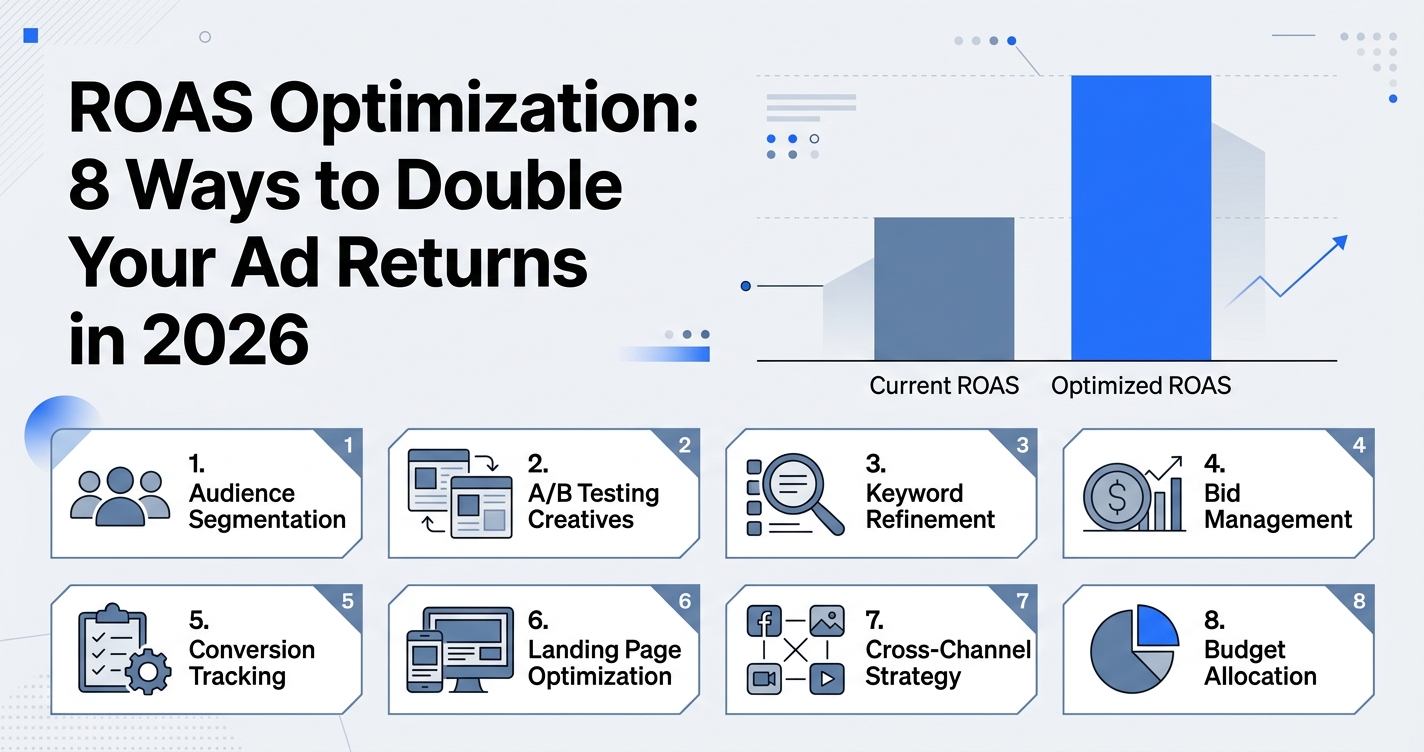
ROAS Optimization: 8 Ways to Double Your Ad Returns in 2026
Tactical guide with specific ROAS benchmarks by industry and step-by-step optimization techniques used in our pay-per-result campaigns, including before/after case studies. Expert insights on ROAS optimization from Seen By Many.